12.8.17

Nicolae Vacaroiu: Negociatorii FMI si BM sunt asemanatori comisarilor sovietici

Manual pentru Ponta despre asasinii economici şi despre trădare naţionalăImage result for nicolae vacaroiu imagini

Motto: “FMI-ul trebuie să se reformeze şi din alte puncte de vedere. Deşi are putere de influenţă asupra membrilor săi, aceasta se aplică numai în momentele de criză şi numai ţărilor mai mici, care au dificultăţi în a-şi onora obligaţiile 
Motto: “FMI-ul trebuie să se reformeze şi din alte puncte de vedere. Deşi are putere de influenţă asupra membrilor săi, aceasta se aplică numai în momentele de criză şi numai ţărilor mai mici, care au dificultăţi în a-şi onora obligaţiile de plată. China, Japonia, Statele Unite şi Germania, naţiuni care îndeplinesc rolul de creditori pentru restul lumii, pot să ignore FMI-ul” – Nouriel Roubini/Stephen Mihm, “Economia crizelor”, ed. Publica, 2010
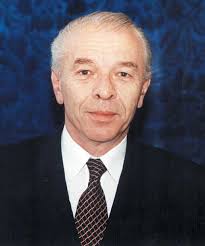
Nicolae Văcăroiu, fostul premier al României între 1993 şi 1996, face dezvăluiri incendiare despre presiunile infernale pe care Fondul Monetar Internaţional, Banca Mondială, dar şi Uniunea Europeană le fac asupra autorităţilor române de la cel mai înalt nivel pentru a le fi pusă România la picioare, despre mecanismul complex şi extrem de eficient prin care ţara ajunge o colonie dispusă să înghită orice, să rabde oricât. Vorbeşte şi despre trădare, iar printre rânduri pot fi identificate figurile sclivisite ale “gulerelor albe” şi ale politicienilor care stau la coadă nerăbdători să-şi trădeze neamul şi ţara. Acum, când Victor Ponta şi ai săi par că tropăie de nerăbdare să dea şi ultimele resurse ale economiei româneşti - de la Roşia Montană la Oltchim, de la Căile Ferate Române la cupru şi gaze de şist -, dezvăluirile fostului premier, făcute în 1998, în volumul “România, jocuri de interese”, constituie un adevărat manual despre cum să-ţi iubeşti ţara. Fără declaraţii pompoase, fără parade ci muncind pe brânci, cu inteligenţă şi maximă responsabilitate.
Victimele genocidului practicat de Banca Mondială şi FMI
“FMI şi Banca Mondială reprezintă o serie de interese, în primul rând interesele celor şapte mari puteri superindustrializate, care deţin peste 56% din pachetul de acţiuni al celor două bănci. Ca să fiu sincer cu dumneavoastră, pot să afirm că ei reprezintă în domeniul financiar-monetar, dar şi în politicile economice, ceea ce erau pe timpuri comisarii sovietici. Au o matrice generală, una şi aceeaşi, pe care o aplică în toate ţările aflate în tranziţie, fără să ţină seama de specificul şi de evoluţia ţării respective, de perspectivele ei de dezvoltare. Este un program perfect din punct de vedere teoretic, dar care poate provoca efecte negative, mai mari sau mai mici, în funcţie de condiţiile concrete din fiecare ţară. Personal, nu cunosc vreo ţară care să fi obţinut succese în urma aplicării măsurilor de ajustare structurală impuse de FMI şi Banca Mondială. Din contră, au avut ca efect adâncirea crizei economice, agravând situaţia deja critică a celor săraci. În cartea sa «Scandalul şi Ruşinea», editată în 1997, Bertrand Schneider – o mare personalitate a Clubului de la Roma – spunea: «Într-adevăr, câmpul vizual al Băncii Mondiale s-a îngustat într-o asemenea măsură încât ea sfârşeşte prin a reprezenta o sursă de sărăcie şi de subdezvoltare în contradicţie totală cu însuşi spiritul misiunii sale». Un eveniment semnificativ în ceea ce priveşte «succesul» celor două organisme financiare internaţionale s-a petrecut în urmă cu circa doi ani, cu prilejul celei de-a 50-a aniversări a FMI şi BIRD. Organizaţii neguvernamentale din întreaga lume au organizat în paralel un forum sub lozinca «50 de ani ajung». Toţi participanţii au fost alături de Vandana Shiva când aceasta a cerut «un minut de tăcere» pentru victimele genocidului practicat de Banca Mondială şi FMI.
Am încercat în acele perioade de negocieri să spargem acest model general, această matrice şi să adoptăm o serie de măsuri convenabile”.
Sinucidere prin cădere economică
“S-a dorit să ni se impună, pentru anul 1993, o cădere economică de circa 15%. Aceasta era principala problemă care ni se punea în faţă. Adăugaţi acest procent la căderea de cca. 54% din perioada 1990-1992 şi veţi avea, cred, imaginea a ceea ce ar fi rămas din economia românească. Ar fi însemnat păstrarea doar a câtorva segmente ale economiei şi coborârea capacităţilor de producţie la o serie de obiective sub pragul de eficienţă. A accepta aşa ceva era echivalent cu o sinucidere, însemna în primul rând distrugerea perspectivei capitalului autohton, care nu ar mai fi avut ce să deservească. Să deservească populaţia? De acord, dar asta în proporţie, să zicem, de 30%, în rest trebuie să deservească marea industrie. Însă marea industrie era pur şi simplu propusă spre lichidare.
Într-adevăr, când am preluat guvernarea, cam 80% din economie se afla în blocaj financiar şi circa 1800 de societăţi mari şi mijlocii erau în pierdere, sau la limită, dar a lichida aceste obiective dintr-un condei ar fi însemnat decapitarea economiei româneşti şi rămânerea fără nici un fel de perspectivă de dezvoltare ulterioară. (...) Se solicita, de regulă, închiderea societăţilor comerciale din ramurile de prelucrare finală, deci cele cu grad ridicat de prelucrare.”
“Să nu exportăm buşteni, ci mobilă”
“De asemenea, interzisesem exportul de fier vechi, minereuri brute, blocuri de marmură şi granit, buşteni etc. – deci materii prime brute – pentru o anumită perioadă de timp, pentru a da posibilitatea producătorilor din ţară (indiferent de forma de proprietate) să se modernizeze, retehnologizeze, restructureze, pentru a ajunge la performanţă în prelucrarea acestor materii prime brute. Cu alte cuvinte, să nu exportăm buşteni ci mobilă, nu blocuri din marmură ci plăci fine, nu fier vechi ci metal prelucrat etc. Era o formă de a atrage investitori străini în realizarea de produse cu grad înalt de valorificare, în România. Asta însemna dezvoltare industrială, asigurarea de noi locuri de muncă, export etc.”
Dispute foarte dure şi foarte serioase
“Când, în locul unei scăderi de 15% am propus o creştere, fie şi mică, reprezentanţii FMI şi ai Băncii Mondiale au spus că aşa ceva este practic imposibil, dar eu ştiam că putem şi am demonstrat-o. Aveam experienţă, eram, sub aspectul pregătirii profesionale, cel puţin la nivelul echipei lor, o echipă condusă de un anume Watson, un irlandez. În ţară aveau ca reprezentant permanent pe un anume Green.
Rezultatele obţinute au dovedit viabilitatea programului nostru de guvernare şi capacitatea profesională a echipei guvernamentale. Concret, am realizat în anul 1993 o creştere a PIB cu 1,3% faţă de anul 1992 şi nu o cădere de cca. 10% cât era estimarea organismelor financiare internaţionale. Au fost şi alte mici victorii în confruntarea cu reprezentanţii FMI şi Băncii Mondiale. Spre exemplu, mi-au spus că prin introducerea TVA veniturile bugetului de stat se vor diminua cu 0,5%, în timp ce noi susţineam că vor creşte cu 0,5%. Rezultatul final a condus la creştere a veniturilor cu 0,4%.
Până la urmă, am dobândit un anumit respect profesional din partea acestor echipe de negociatori, însă disputa a rămas în cotinuare foarte dură şi foarte serioasă. Să nu vă închipuiţi însă că stăteam şi ne târguiam zi de vară până seară, că apăream cu dânşii la televiziune, aşa cum s-a întâmplat ulterior. Discutau cu specialiştii noştri din Ministerul de Finanţe, Banca Naţională, ministerele economice, iar la primul ministru nu stăteau decât o jumătate de oră, o oră maxim, aşa cum este normal.”
Măsurile impuse de FMI duc la destabilizarea ţării
“Măsura care ni se cerea era de lichidare rapidă a tuturor societăţilor comerciale cu pierderi, care nu-şi pot onora obligaţiile financiare faţă de furnizori, bugetul de stat şi de asigurări. Era o analiză economică la rece care nu ţinea seama de situaţia concretă din ţară, de efectele dezastruoase pe care le-ar provoca asupra întregii societăţi, pe termen mediu şi lung, punerea în aplicare a măsurilor propuse de aceste organisme financiare internaţionale
În 1993, când se purtau aceste discuţii, aproape întreaga economie se afla în blocaj financiar, mai bine de jumătate din industrie îşi închisese porţile (în primii trei ani de după revoluţie se produsese deja o restructurare, involuntară, haotică), agricultura se afla în plină criză, nemaiputând să asigure securitatea alimentaţiei populaţiei, subcapitalizarea societăţilor comerciale atinsese cote alarmante (creditul pentru producţie depăşea, în medie, 75% din necesarul de capital circulant) în mare parte şi ca efect al practicării de dobânzi real pozitive exagerate timp de trei ani. Şi nu uitaţi că economia ajunsese în această stare după punerea în aplicare de către guvernanţi a măsurilor impuse prin acorduri de către FMI şi Banca Mondială. A continua pe această linie ar fi însemnat colapsul total al economiei, costuri sociale imposibil de suportat, declanşarea de conflicte sociale puternice, destabilizarea ţării.
Sigur că aveam alternative pregătite – chiar acceptând unele din măsurile cerute de organismele financiare internaţionale – pe care le-am pus pe masă în discuţiile purtate mai bine de jumătate de an. În final, au fost acceptate multe din măsurile propuse de noi. În practică, rezultatul noilor mecanisme s-a concretizat în reducerea treptată a blocajului financiar de la 80% din PIB (la 1 ianuarie 1993) la cca. 18% din PIB (la 31 decembrie 1996), refacerea echilibrelor macroeconomice prin creştere economică şi nu prin cădere, aşa cum ni se propunea, recuperarea în mare parte a pieţelor externe, dezvoltarea sectorului privat, care la predarea mandatului nostru contribuia cu 52% la crearea PIB.”
Preţuri mari impuse la electricitate şi gaze
“Am avut discuţii interminabile şi în ceea ce priveşte impunerea unor preţuri la energia electrică şi la gazele naturale. Punctul meu de vedere a fost acela că, fiind producători de astfel de resurse, nu e nevoie să includem o serie de cheltuieli în preţ ca şi cum am importa energie. De altfel, ceea ce se solicita şi anume un preţ de 50 de dolari pe MW nici nu exista ca atare în economia mondială, era un preţ artifical. Până la urmă, am reuşit să cădem de acord asupra unui mecanism de recalculare în baza păcurii, care avea preţul cel mai scăzut. De asemenea, s-a acceptat, pentru câţiva ani, să practicăm un tarif mai scăzut la energia electrică şi termică livrată populaţiei, comparativ cu cel suportat de agenţii economici. Oricum, industria, agricultura etc. primeau energia la un tarif mediu de 40-45 dolari/MW, faţă de 65-75 dolari/MW în prezent în comparaţie cu 40-45 dolari/MW cât este tariful mediu pe piaţa mondială.
Am obţinut deci o serie de succese în aceste negocieri, ceea ce a dus la unul dintre cele mai mari ritmuri de creştere mediu anuale din Europa, de 5-6% în industrie, iar în agricultură reuşisem, după o muncă de selecţie, să reabilităm marile complexe de creştere a porcilor şi a păsărilor şi să reintroducem şi să dezvoltăm sistemul de subvenţii şi prime, desigur în măsura în care ne permiteau resursele. În acest fel, până în 2002, când era prevăzută liberalizarea comerţului cu Uniunea Europeană, am fi ajuns la acelaşi mecanism cu cel practicat în ţările respective. Am fi ajuns şi noi, spre exemplu, să acordăm producătorilor de carne, de la buget, o subvenţie de 40% din preţ şi o primă de export de 10-15%, aşa cum procedează astăzi ţările membre ale Uniunii Europene şi chiar unele ţări vecine, cum este Ungaria. Efectele scontate: valorificarea potenţialului agricol deosebit de care dispune România; asigurarea securităţii alimentaţiei populaţiei la preţuri accesibile; transformarea agriculturii, prin export, într-o ramură aducătoare de aport valutar; relansarea industriei care deserveşte agricultura; creşterea substanţială a veniturilor celor care lucrează în această ramură.”
Florin Georgescu: ”Se naţionalizează pierderile şi se privatizează profiturile”
“Am privatizat 2800 de unităţi şi, mă rog, se poate comenta că au fost multe sau că au fost puţine, dar criteriul nu a fost numărul lor ci oportunitatea de a le privatiza, creşterea producţiei, a calităţii acesteia în condiţii superioare de profitabilitate. Nu mi-aş fi putut permite în nici un caz să scot la privatizare societăţile cele mai profitabile, să scot la vânzare fabricile de ciment care făceau două sute de miliarde profit pe an şi să le dau unui investitor strategic. Trebuie să spun ori de câte ori am prilejul că aceste societăţi trebuiau scoase la momentul oportun la privatizare, respectiv când ar fi existat condiţii de participare a capitalului autohton la acest proces şi prin ofertă publică şi în orice caz printr-o formulă adecvată care să conducă la spargerea monopolului. Mai ales că la fabricile de ciment – ca să rămân doar la acest exemplu – nu era nevoie de investiţii deosebite, poate de câteva milioane de dolari ca să fie cumpărate filtrele pentru a diminua poluarea. Am realizat că este o crimă să dai din mână societăţile cele mai profitabile, să faci ceea ce a spus la un moment dat Florin Georgescu despre ceea ce se întâmplă acum, respectiv că «se naţionalizează pierderile şi se privatizează profiturile».
Mi se cerea atunci – şi iată că după aceea s-a şi realizat – să facem privatizarea la normă, conform unui plan, fără să privesc în perspectivă, să văd în ce măsură este profitabil pentru economia naţională.
Nevoia de guvernanţi puternici, inteligenţi, care să nu piardă cel mai aprig război – al pieţelor de desfacere
“Este vorba şi de o strategie conjugată, bine gândită, impusă de FMI şi Banca Mondială. Nu trebuie ascuns faptul că aceste organisme financiare internaţionale fac jocul marilor puteri care deţin pachetul majoritar de acţiuni şi nu ţin seama de condiţiile specifice din fiecare ţară.Aplicarea brutală a unor strategii economico-financiare generale  duce automat la o scădere pronunţată pe plan industrial, agricol şi efectele se regăsesc în căderea pieţei interne, pierderea pieţelor externe, ceea ce transformă totul într-o măsură eficace de penetrare a produselor din ţările dezvoltate pe pieţele eliberate. Să nu uităm că la sfârşit de secol XX ne confruntăm cu cel mai aprig şi dureros război – lupta pentru pieţe de desfacere. Lovitura sub centură, pe la spate, face parte, ca ceva normal, din regulile de bază ale acestui război. Cine câştigă? Aproape întotdeauna ţările superindustrializate, căci au de partea lor puternicele corporaţii multinaţionale (urmăriţi fuziunile din ultima vreme) şi bineînţeles organismele financiare internaţionale. Ţie, ca ţară în curs de dezvoltare, aflată în traziţie, ţi se cere să iei măsuri rapide de fărâmiţare a terenurilor agricole, să divizezi societăţile mari în mai multe societăţi, să distrugi sistemele integrate din domeniul energetic, transporturi etc. În aceste condiţii, ai nevoie de guvernanţi puternici, inteligenţi, care aleg cu răbdare calea, nu pentru a câştiga dar cel puţin pentru a nu pierde acest război.”
Trădarea din interior
“România, la începutul lui 1995, începuse să aibă o imagine excelentă în mediile politice occidentale şi mai ales pe piaţa privată de capital. Deci, se impunea să procedăm ca celelalte ţări, Ungaria, Polonia, Cehia, să ieşim pe piaţa privată de capital de unde să luăm două, trei miliarde de dolari, bani pe care să-i introducem în totalitate în rezerva valutară a statului pentru a da încredere în moneda naţională. Era o măsură obligatorie, pe care alţii au realizat-o, fiindcă în acest fel puteam ieşi de sub dependenţa totală de FMI şi Banca Mondială. (...) Am avut discuţii destul de dure cu guvernatorul Băncii Naţionale, discuţii care nu au dat rezultate. Sigur, Banca Naţională n-a spus nu, de altfel o şi ajutasem să poată ieşi pe o astfel de piaţă, cu ajutorul ambasadorului nostru în Japonia, domnul Dijmărescu, cu care am colaborat personal pentru a intra în legătură cu societatea financiară Nomura. Nu s-a spus deci un «nu» ferm, dar m-a deranjat enorm – şi o spun pentru prima oară – faptul că în urma acestei discuţii într-un cerc restrâns, care avea un caracter oarecum confidenţial, reprezentantul misiunii FMI a venit urgent la Bucureşti. Cineva îl informase că premierul forţează ieşirea pe piaţa privată de capital. L-am întrebat de ce este interesat de această problemă, i-am explicat că rolul său este să-şi vadă de atribuţiile pe care le are, că FMI şi Banca Mondială sunt totuşi bănci internaţionale, unde şi ţara noastră este acţionar şi că nu au dreptul de a trage la răspundere guvernul pentru intenţia de a atrage şi alte surse financiare externe. Discuţia s-a închis foarte rapid.
În concluzie, operaţiunea a fost declanşată cu aproape un an de zile întârziere, când am ieşit, într-adevăr, pe piaţa privată de capital pentru prima dată în istorie. Este vorba de piaţa japoneză, piaţa care dispunea de lichidităţi şi era cea mai receptivă în acel moment. Ne-a ajutat să facem acest pas faptul că România obţinuse ca urmare a rezultatelor pe linia reformelor, a ritmurilor ridicate de creştere economică, a stabilităţii macroeconomice realizate în a doua parte a anului 1994 etc., o cotă de risc de ţară bună (BB+), apropiată de cea a Cehiei şi a Poloniei. (...) Aceasta a fost deci a doua acţiune care, cu toată buna mea intenţie şi cu toată activitatea depusă, n-am putut să o realizez la timp, ceea ce ne-a costat. Normal ar fi fost să avem până în 1996 cel puţin patru, cinci ieşiri pe piaţa privată de capital, să avem cinci-şase miliarde de dolari de pe această piaţă. În momentul când s-a înregistrat o cădere a PIB de peste 10% în 1997, am devenit din nou dependenţi aproape în exclusivitate de FMI şi Banca Mondială.”
„Se dorea să revenim la nivelul dinainte de 1945”
“Când am preluat guvernarea, circa 80% din PIB se afla în blocaj financiar şi, mai mult decât atât, peste 1400 de societăţi şi regii se aflau în pierdere. La sfârşitul mandatului meu, acest număr se redusese la 200, ca urmare a muncii de aplicare a programelor de restructurare.
Dacă aş fi mers pe principiile aplicate sau măcar enunţate în anul 1997 şi impuse de FMI, ar fi însemnat, pur şi simplu, ca toate aceste societăţi şi regii să fie lichidate, ceea ce ar însemnat ca economia românească să funcţioneze la circa 20% din nivelul anului 1989. Practic, însemna să nu mai aibă industrie, să revenim, poate, la nivelul dinainte de 1945, să nu mai contăm pe piaţa externă, să nu mai putem asigura satisfacerea necesităţilor populaţiei, să fim condamnaţi să ne transformăm într-o ţară puternic importatoare de absolut orice.
Ar fi fost o tragedie naţională, ar fi însemnat intrarea ţării în situaţia de a nu mai putea plăti, chiar şi cu un buget destul de restrâns, aparatul public, am fi ajuns ca Rusia, Ucraina, să nu mai putem plăti pensiile decât la patru sau la şase luni de zile, n-am mai fi avut bani pentru armată, pentru sănătatea publică, pentru cultură, pentru cercetarea ştiinşifică.”
Privatizare la doi lei
Asemenea gafe nu se pot face decât din nepricepere, dar la fel de adevărat este că în spatele acestor iniţiative au fost şi sunt jocuri de interese, mai întîi cele externe, care urmăresc eliminarea concurenţilor de pe piaţa externă şi penetrarea pe piaţa internă a României, şi în al doilea rând cele interne prin realizarea de venituri personale sau de grup, privatizând societăţi comerciale atractive în faza de lichidare, respectiv la un preţ mult mai scăzut decât cel real.
(...)Şi acum apare şi reaua intenţie, fiindcă în paralel cu desfiinţarea societăţii Promex Brăila, care producea excavatoare, buldozere, s-au început negocierile pentru încheierea unor contracte de import (din SUA) de utilaje complexe (maşini agricole, buldozere, excavatoare etc.) în valoare de cca. 180 de milioane de dolari, desigur cu garanţia guvernului român. Fiindcă nu trebuie uitat că până în 1989, peste 60% din producţia de aici era livrată la export, iar excavatoarele şi buldozerele din Brăila erau cunoscute în întreaga lume.
Cum poţi, deci, să iei decizia de desfiinţare a unei astfel de societăţi numai fiindcă ţi-a cerut-o cineva de la FMI sau Banca Mondială şi în acelaşi timp să vorbeşti despre buna ta credinţă? Vreţi ca FMI şi Banca Mondială să ţină cu România, sau cu americanii, germanii, japonezii etc., care sunt principalii acţionari?”
Devalorizarea teribilă a leului şi majorarea explozivă a dobânzilor, mijloacele falimentării
“La începutul anului 1997, Guvernul şi Banca Naţională au acceptat, sub presiunea FMI, punerea în aplicare a două măsuri – deprecierea leului de la 4.035 lei/USD la 8.500 lei/USD şi majorarea dobânzilor la credite de la 70% pe an la peste 200% pe an, măsuri care au provocat punerea în situaţia de a falimenta a majorităţii societăţilor comerciale, indiferent de forma de proprietate. Efectul s-a regăsit în căderea serioasă a veniturilor bugetare, obligând Ministerul Finanţelor să emită pe bandă rulantă noi titluri de stat, cu dobânzi uriaşe, chiar şi de 400%. Sigur că în atare situaţie băncile comerciale au redus operaţiunile de creditare a economiei, cumpărând titluri de stat, unde realizau profituri de 4-5 ori mai mari. Şi iată cum, după ce ne-au criticat vehement, într-un singur an, 1997, datoria publică a ajuns la peste 18 mii de miliarde.
Şi acum să discutăm despre o a doua acuzaţie. S-a spus că eu am ţinut cursul de schimb pe loc. Absurd, fiindcă Banca Naţională nu-mi era subordonată. S-a trecut însă la această devalorizare masivă – şi opinia mea este că ea a fost realizată de Banca Naţională în înţelegere cu FMI – care a fost una dintre cele mai mari gafe posibile ale actualei guvernări.”
Desfiinţarea rezervei strategice de grâu
“În 1997 s-a realizat o producţie-record de cereale, datorită campaniei agricole din 1996, numai că aceste produse nu au mai avut valorificare, iar producătorul agricol nu a mai avut cum să-şi achite datoriile.
De ce nu s-au mai vândut cerealele, iarăşi este interesant să analizăm. În primul rând, s-a desfiinţat practic rezerva strategică de cereale a României, mai ales la grâu, printr-o măsură impusă din exterior. Măsura a fost bine gândită ca să ne pună pe butuci.Concret, rezerva de grâu a ţării era, dintotdeauna, de cca. două milioane de tone (din care un milion de tone pe stoc de siguranţă), respectiv trebuia să se asigure aprovizionarea populaţiei cu pâine pe un an de zile, în cazuri deosebite – secetă, inundaţii, război etc. În 1997 această rezervă s-a redus la 350 mii de tone.
Au fost presiuni externe şi asupra mea, în 1993, şi m-am opus categoric să desfiinţez rezerva strategică. M-am opus, fiindcă exact în acelaşi o trăsesem, ca să spun aşa, pe pielea mea, avusesem un an agricol dezastruos pe vremea Guvernului Stolojan şi m-am văzut în situaţia de a rămâne fără grâu pentru pâinea populaţiei şi de a apela la marii exportatori, adică la Canada, Franţa etc. Preţul la grâu era atunci 115-120 dolari, dar ştiind că am nevoie au crescut imediat preţul la 175 de dolari tona. Iată ce înseamnă lupta pe piaţă pentru profit, cum se realizează în fapt sprijinul ţărilor dezvoltate către cele aflate în tranziţie.”
Odată distrusă, industria nu se mai poate reconstrui
“La bănci, unde profiturile sunt mari, s-a făcut deci restructurare cu bani publici, iar la societăţile importante pentru economie nu se preiau datoriile şi sunt lăsate în faliment. Iată un exemplu clar de cum se acţionează faţă de interesele României.
Unii au spus că mecanismele de piaţă trebuie puse imediat în funcţiune, chiar în mod brutal, iar piaţa va juca rolul de regulator. S-ar închide astfel circa 90% din industrie, după care s-ar încerca punerea pe picioare, aproape de la zero, a unei noi economii. Întrebarea – sau una dintre întrebări – este în cât timp am putea reuşi să construim din nou industria care ne trebuie. Ne-ar trebui 30 de ani? Ne-ar trebui 60?
Cert este că o industrie nu se construieşte în cinci ani sau într-un deceniu.
Următoarea întrebare ar fi dacă principiile globalizării economice ne-ar mai permite să creăm o industrie în România. Ne mai putem întreba, legat de acestă ultimă problemă, dacă putem identifica vreun segment al industriei pe care vrem să o construim din nou în care să nu existe în ţările dezvoltate mari producători, care domină astăzi piaţa mondială şi care să nu se confrunte periodic cu supraproducţia. Deci, întrebarea este dacă există cineva în lume dispus să vină în România cu tehnologie de vârf într-un anumit domeniu, în situaţia când ţările industrializate se confruntă cu criza de supraproducţie? Şi dacă ar fi cineva dispus să ne ofere o astfel de tehnologie, îi va permite statul lui acest lucru? ”
România – colonie corporatistă internaţională
“Noi suntem în situaţia ca într-un an-doi să avem raportul despre care vorbeam răsturnat şi să avem 60-65% investitori străini care vor deţine puterea economică şi numai 35-40% capital autohton şi aceasta doar în întreprinderile mici şi mijlocii. În acel moment putem spune că România va pierde independenţa economică cu toate implicaţiile ce decurg. Trebuie să pornim de la faptul că noi am moştenit o economie centralizată, o economie în care totul era proprietate publică a acestor 23 de milioane de locuitori. Oamenii care au muncit, au stat în frig, au răbdat de foame sunt cei care au creat, cu suferinţa lor, tot ce s-a creat. Nu poţi să bagi capul în nisip şi să le spui acestor oameni că nu te interesează ceea ce au construit, că te-ai decis să vinzi totul către oamenii de afaceri străini, deci să nu dai nici o şansă capitalului autohton, nici măcar la societăţile comerciale cu profit. Să fim clari şi corecţi, cine deţine puterea economică, controlează întreaga societate românească.
Nu poţi, de asemenea, să le spui că 1% vor deţine bogăţiile României, iar cei care au muncit pe acest pământ românesc nu au altă şansă decât să muncească în continuare pentru profitul altora şi să trăiască, cel puţin o bună perioadă de vreme, mai rău decât pe timpul lui Ceauşescu. Nu poţi să provoci dintr-odată o asemenea suferinţă populaţiei cel puţin pentru motivul că efectul va fi dezastruos şi imediat. Ne putem afla în situaţa unei destabilizări totale, când nu se va mai putea aplica nici un fel de reformă în România, nici graduală, nici de şoc. Iar remediul unei asemenea situaţii nu ar putea fi altul decât reinstaurarea dictaturii, ori eu cred că nimeni nu îşi doreşte aşa ceva. Iată că situaţia poate deveni foarte gravă dacă analizăm posibilele evoluţii în timp. Permanent trebuie să ne gândim să nu pierdem autonomia economică a ţării, să nu ne transformăm într-o colonie corporatistă internaţională în aşa fel încât generaţiile care vin după noi să înceapă lupta pentru independenţă, să declanşeze un nou război, de data aceasta politic şi economic, pentru independenţa României.
De la construcţia de avioane la spătare pentru Mercedes
Vă întreb, la ce ar folosi la un moment dat chiar dacă vor veni în România câteva miliarde de dolari, dacă populaţia e slăbită, bolnavă, lipsită de mândrie naţională, lipsită de speranţă? Reconstruirea unei societăţi moderne ar dura extrem de mult, poate câteva generaţii. Şi în această perioadă nu putem realiza acea pătură mijlocie, întreprinzătorii mici şi mijlocii? Pe cine să deservească aceste întreprinderi mici şi mijlocii? Să facă un spătar de lemn pentru Mercedes, aşa cum se face la Codlea? Dacă considerăm că asta va fi industria de viitor a României, industrie care produce astăzi elicoptere şi avioane, nave etc., atunci nu mai avem ce discuta. (...) Pierderea autonomiei economice ar crea probleme serioase în ceea ce priveşte păstrarea statului naţional unitar român, care este primul principiu al Constituţiei.
Industria şi agricultura, pe butuci
“Ceea ce se întâmplă acum este întru totul asemănător cu ceea ce s-a întâmplat cu CAP-urile. Aduceţi-vă aminte că în 48 de ore s-a distrus tot, o întreagă avuţie naţională, s-au distrus grajduri, s-au împărţit animale, s-au scos din funcţiune utilaje, sisteme de irigaţii. S-a mai refăcut ceva în agricultură? S-ar mai putea reface ceva în industrie după ce ea ar fi complet distrusă?
Eu, indiferent ce mi s-ar spune că se doreşte, nu pot fi de acord cu o politică prin care vând fier vechi din România, vând blocuri de marmură din România, vând lemn brut, totul fiind de vânzare, cât mai liber, iar noi terminăm cu fabricile de mobilă, cu fabricile de prelucrare a blocurilor de marmură şi cu metalurgia românească.
Plan Marshall, nu para-ndărăt prin „asistenţă tehnică”
“Economia de piaţă din ţările dezvoltate s-a construit în timp, până a ajuns la performanţă, şi a început să funcţioneze când au fost puse în aplicare cu o rigoare extraordinară două instrumente şi anume hotărârea de a face cea mai puternică lege din contractul dintre părţi (orice întârziere în respectarea contractelor însemnând amenzi şi penalităţi extrem de dure) şi, în al doilea rând, când s-au dat puteri depline poliţiei fiscale şi orice încălcare a disciplinei fiscale a fost sancţionată foarte dur, cu închisoarea.
În momentul când au fost puse la punct aceste două instrumente, abia atunci a început să funcţioneze cum trebuie economia capitalistă.
În ţările europene avansate, după ce s-a ajuns la performanţă economică, având, fireşte, în spate un Plan Marshall, nu o asistenţă tehnică în care banii se întorc la cei care ni-i dau, ci o finanţare directă, nerambursabilă, aşadar după ce s-a construit o economie dezvoltată, s-a pus accentul pe fiscalitate, cum este în Suedia, unde fiscalitatea este de 55%, faţă de 32% în România şi astfel s-a ajuns la o redistribuire care să asigure pacea socială şi stabilitatea iar cei care fac afaceri să nu fie tulburaţi de cei care nu au ce mânca şi trebuie să fure sau să provoace acte din ce în ce mai perturbatoare pentru societate.”
Agricultura, obligatoriu bine dezvoltată
“Deci, să aducem în ţară valută şi cu ea să realizăm modernizarea, retehnologizarea, astfel încât să ajungem, spre 2005-2010, la o industrie care să fie cât de cât competitivă, la o agricultură obligatoriu bine dezvoltată, fiindcă aici este punctul cel mai sensibil al competiţiei cu ţările UE, competiţie în care dacă nu ne putem angaja, atunci murim. Iar în acest timp să acţionăm pentru pregătirea noilor generaţii în domeniul informaţional, ceea ce începe cu dotarea şi pregătirea din şcoli.”
S-au acceptat toate condiţiile impuse de FMI
“Am spus că trebuie renegociate acordurile cu FMI şi Banca Mondială, fiindcă multe din măsurile înscrise în aceste acorduri ne conduc spre prăpastie şi s-a spus da (de către premierul Radu Vasile – n. red.), se vor renegocia, dar deocamdată lucrurile au rămas la fel. Programul economic este la ora actuală alcătuit din tot felul de principii generale care nu servesc la nimic, luate toate din respectivele acorduri şi astfel circa 80% din măsurile programului Guvernului Radu Vasile le găsim în programele ASAL şi FESAL, cu toate că se spune că sunt programe pur româneşti.
Din păcate, în februarie 1997, o dată cu sosirea misiunilor FMI şi Băncii Mondiale, guvernanţii s-au grăbit nepermis de mult (practic, nu au negociat), şi au acceptat toate condiţiile impuse de aceste organisme internaţionale. Le găsiţi în detaliu în memorandumul semnat cu FMI şi în acordurile ASAL şi FESAL semnate cu Banca Mondială. (...) Efectul îl scontam, fiindcă în aceste acorduri am regăsit în mare parte condiţiile care se încercase să mi se impună în 1993. Am regăsit şi unele condiţii cum ar fi aceea, esenţială, că refacerea echlibrului macroeconomic trebuie să se facă prin cădere economică şi nu prin creştere. S-au acceptat condiţii noi, cum ar fi privatizarea prin lichidare, pentru ca apoi să se spună că a fost o greşeală de traducere, că era vorba de privatizare sau lichidare. S-a stipulat chiar şi un număr exact de societăţi care trebuie lichidate, fără ca în prealabil să se facă o analiză de fond a fiecărui caz în parte.”
Victor Ciorbea a fost umilit
”Pentru mine a fost o surpriză neplăcută (când premierul Victor Ciorbea a prezentat noul program de guvernare în faţa televizoarelor fiind însoţit de reprezentanţii organismelor financiare internaţionale – n.red.) şi am considerat că primul ministru a fost umilit, mai precis s-a pus în situaţia de a fi umilit. Nu este admisibil ca şeful executivului unei ţări, nu contează care este acea ţară, să iasă braţ la braţ cu nişte funcţionari ai unor organisme financiare internaţionale la o conferinţă de presă. Este nefiresc şi nu am auzit să se fi întâmplat un caz similar în alt colţ al lumii.”

Ordonanţe şi decizii de proastă calitate
“(…) Membrii Guvernului (Ciorbea – n. red.) au început să nu mai consulte specialiştii, care de o viaţă întreagă studiau problemele din domeniul lor, ci pur şi simplu să se întâlnească ei între ei şi să ia decizii, emiţând ordonanţe şi ordonanţe de urgenţă «pe picior>, cum se spune, ordonanţe şi decizii de proastă calitate. Iar după semnarea acordurilor cu FMI şi Banca Mondială, au început pur şi simplu să le pună în aplicare, măsură cu măsură, fără măcar a consulta specialiştii din ministere cu privire la efectele asupra economiei şi societăţii româneşti în ansamblul ei.”
UE, împotriva grâului românesc
“La aceasta s-a adăugat şi măsura stipulată în acordul cu Banca Mondială de desfiinţare a rezervei strategice de grâu. De la două milioane de tone de grâu s-a ajuns la 350 de mii de tone, care înseamnă consumul pentru panificaţie de circa o lună, o lună şi jumătate. Această măsură a fost forţată nu numai de Banca Mondială ci şi de UE, datorită faptului că grâul este unul dintre produsele de bază care circulă în economie, face obiectul exportului, iar UE se confruntă cu excedente la grâu, ca şi Canada ori SUA, ţări interesate să pătrundă cu livrări de grâu şi pe piaţa românească. Dădeam primele şi subvenţiile cu condiţia ca 40% din producţie să o contracteze cu statul şi să preluăm grâul la rezerva strategică, acolo unde nu putea aduce decât grâu de calitate.”
„Am exportat lemn în disperare”
“Pentru a se suplini această cădere a producţiei prelucrate, s-au dat o serie de ordonanţe care ne-au surprins. S-a liberalizat exportul pentru lemnul pe picior, am început să exportăm buşteni, ceea ce a făcut ca preţul să explodeze şi fabricile de prelucrare a lemnului să fie puse pe butuci. Deci, am început să exportăm lemn oarecum în disperare, nu a fost tras nici măcar în cherestea sau în parchete, nu s-a urmat nici cel puţin al doilea ciclu de valorificare. Am început să exportăm fără limită fier vechi sau blocuri de marmură, în condiţiile în care avem şase, şapte fabrici private de prelucrare a marmurii care au adus instalaţii ultramoderne în valoare de zeci de milioane de dolari pentru tăierea blocurilor de marmură în plăci, crescând gradul de valorificare de la unu la patru.
Adăugaţi la toate acestea politicile comerciale şi politicile în domeniul vamal care ne-au descumpănit o dată în plus. Ne-am trezit peste noapte cu o serie de măsuri, dintre care unele, sunt convins, deservesc o serie de interese de grup, prin care se produc modificări ale nivelului taxelor vamale, reduceri masive care au lăsat fără protecţie industria naţională, agricultura, zootehnia şi toate acestea în condiţiile în care aveam un acord semnat cu UE care ne permitea să avem taxe vamale ridicate până în 2002, când aceste taxe trebuiau reduse.
Efectul nu este altul decât prăbuşirea sectoarelor respective din economie, mergând până la lichidare, până la închidere.
Au fost şi cazuri de-a dreptul hilare, cum ar fi exemplul pe care l-am discutat deja privitor la introducerea taxelor vamale la importul de bumbac, în condiţiile în care România nu produce bumbac. Deci, se reduce sau se desfiinţează taxele vamale la lână, în condiţiile în care avem lână în ţară şi se măresc la bumbac, pe care nu-l producem, ceea ce pur şi simplu, ca observator al acestor fenomene, te poate pune serios pe gânduri.
Pot eu să spun că aceste măsuri sunt luate din nepricepere? S-a venit cu argumentul că nu s-a făcut altceva decât să fie aplicat acordul de asociere cu UE semnat pe timpul Guvernului Văcăroiu. Dar operaţiunile au fost făcute înainte de termen şi, în al doilea rând, în contextul în care s-au acceptat măsuri de cădere economică trebuia imediat să se treacă la renegocierea acestui acord fiindcă nu mai corespundeau termenele, trebuia mărit intervalul de protecţie a economiei româneşti. Renegocierea trebuia făcută cu atât mai mult cu cât nu facem parte din rândurile ţărilor care au fost acceptate pentru începerea negocierilor de aderare la Uniunea Europeană.”
“Nici reprezentanţii FMI în România nu cred în reuşita programului lor”
Reprezentanţii FMI vin cu lecţia bine învăţată de acasă şi pentru orice abatere cer aprobarea conducerii FMI. (...) E greu să-ţi dai seama de tot ceea ce gândesc, dar cred că în mare parte nici reprezentanţii FMI în România nu cred în reuşita programului lor, pentru simplul motiv că programele FMI nu au dat rezultate în nici o ţară, cel puţin până la ora actuală. De altfel, în ultimii ani aceste organisme financiare internaţionale sunt supuse unor critici din ce în ce mai acerbe ale unor specialişti de marcă în probleme de economie mondială. Tot mai mulţi coloşi ai gândirii economice critică aceste politici şi practici ale FMI de a impune o matrice unică, foarte bună teoretic, pentru toate ţările aflate în tranziţie. Este ca şi cum ai trata un bolnav, indiferent de boala lui, numai cu aspirine. Sau nu, ar fi bine dacă ar fi un tratate numai cu aspirine, dar e vorba de un tratament chirurgical, se taie şi după ce te-a tăiat şi ţi-a scos câteva organe, constată că acele organe sunt sănătoase.
Repet afirmaţia că nu trebuie uitat pe cine reprezintă FMI, că acest organism este, în fond, o bancă ai cărei acţionari majoritari sunt marile puteri industrializate care nu au şi nu vor avea niciodată interes să-şi creeze concurenţi pe anumite pieţe printre ţările în curs de dezvoltare.Aceşti reprezentanţi ai FMI sunt bine instruiţi înainte de a pleca în misiunile lor. Pe ei nu-i interesează condiţiile concrete din ţările unde sunt trimişi iar mandatul lor este limitat, vrei să faci ceea ce-ţi cere, bine, nu vrei, pleacă acasă, se mai discută... şi aşa mai departe.
Duritatea acestor negocieri este mare, având în vedere jocul de interese, iar până la urmă totul depinde de măsura în care ai forţa şi pregătirea să-l ţii în corzi, fireşte, nu la nivel de prim ministru, ci la nivelul  specialiştilor, al Băncii Naţionale. Specialiştii trebuind să aibă şi pricepere şi forţă şi, mai ales, să aibă dorinţa de a lupta pentru ţară, nu plăcerea de a face pe gustul FMI.”
FMI nu-şi asumă eşecurile
“Este de ştiut că nici FMI şi nici Banca Mondială nu-şi asumă responsabilitatea în caz de eşec.De fiecare dată, reprezentanţii acestor organisme internaţionale declară public (după ce ai acceptat măsurile cerute, în caz contrar eşti ameninţat cu ruperea relaţiilor) că programul de măsuri este al guvernului şi deci toată responsabilitatea este a lui. Este însă la fel de adevărat că atunci când în negocieri vii cu argumente solide, ai câştig de cauză în faţa FMI şi a Băncii Mondiale. (…) Când misiunea FMI se loveşte de argumente puternice, cedează. Nu uitaţi că premierul Ciorbea a avut un mare avantaj, acela de a fi avut la îndemână o serie de acorduri încheiate de noi cu FMI şi Banca Mondială, acorduri în care o serie de măsuri impuse până în 1992 au fost apoi eliminate.”
România, dependentă total de FMI
“Nerespectarea unor prevederi (din acordurile încheiate în 1997 – n. red.) ar însemna o ruptură totală cu FMI şi Banca Mondială, ceea ce ar fi o mare greşeală. Au fost ţări care şi-au permis acest lucru, dar numai după ce au avut o serie de surse financiare atrase de pe piaţa privată de capital. Ori, ceea ce am început noi în 1996, prin ieşirea pe piaţa privată de capital şi în Japonia şi în Europa şi în SUA, s-a blocat o dată cu căderea economiei în 1997, o dată cu creşterea riscului de ţară. Am rămas astfel descoperiţi şi acum singura noastră sursă este FMI şi Banca Mondială, am devenit în totalitate dependenţi de aceste organisme.
Este suficient ca aceşti comisari financiari ai marilor puteri să dea un semnal negativ pentru a nu mai avea acces pe piaţa mondială de capital.
“Am îngenuncheat şi facem sluj”
“Nimeni nu ne vrea binele, precum nimeni nu ne vrea răul, ci îşi urmăreşte binele propriu.Important este ca noi înşine să ne dorim binele şi când am discutat despre relaţiile noastre cu FMI şi Banca Mondială nu am dorit să culpabilizez aceste organisme, ci să demonstrez că nu ele greşesc, ci noi greşim. Acum, însă, am impresia că am îngenuncheat, că ascultăm prea uşor o serie de sfaturi, că indiferent cine ne spune ceva noi punem imdeiat în aplicare.
(...) Ne-am umilit şi m-a durut, ca fost prim ministru, dar şi ca cetăţean, să văd cum facem sluj pe la diferite mărimi. Şi îmi pare rău de faptul că mari specialişti ai ţării, mari personalităţi ale culturii, economiei etc., care înţeleg foarte bine ce se întâmplă la această oră în România, nu au curaj să-şi exprime opiniile de teamă. Imediat ce spune cineva un cuvânt împotriva unei măsuri cuprinse într-un acord financiar internaţional, imediat este catalogat drept conservator, comunist, antireformator, ceea ce provoacă o stare generală de frică.
Cred că este timpul ca specialiştii să nu se mai teamă, să ridice problemele, să spună ce gândesc, la televiziune, în presă, la întâlnirile cu politicienii, să arate efectele care se produc, să spună ce se întâmplă cu ţara, să vină cu idei, soluţii, să se bată pentru ele.
Este momentul să înţelegem că am înlocuit frica totalitară, ceauşistă, printr-o altă frică, la fel de dăunătoare pentru destinul naţional.
Dacă nu vom înţelege asta, înseamnă că ne merităm soarta.

11.8.17

Anthony Signorelli: The Postcapitalist Manifesto

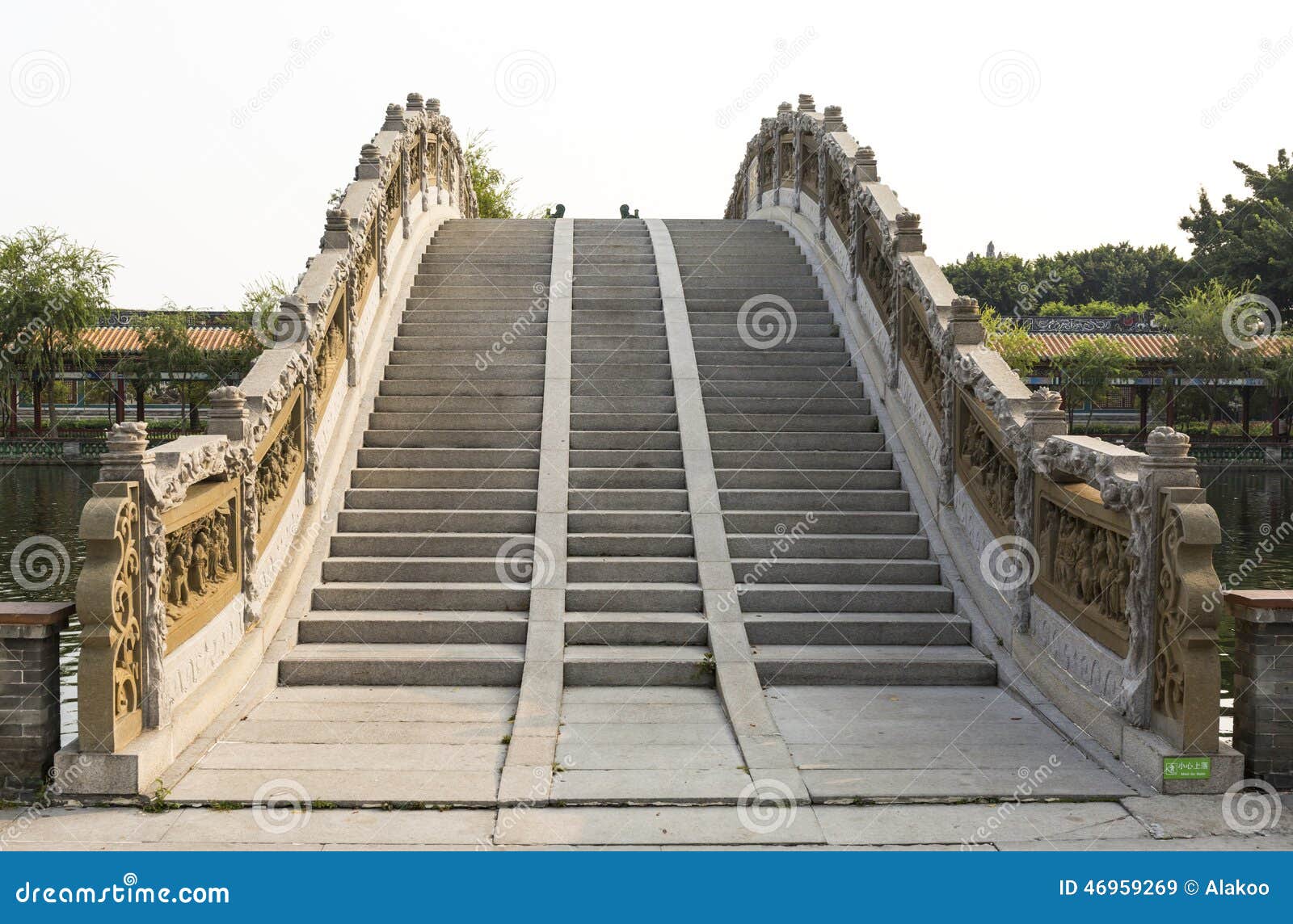
Image result for bridge with stairs

A Unique Time in History
For the first time in 500 years, we could actually change the capitalist system. I mean replace it, not just revise it. I mean get rid of capitalism and create something new. And it is all happening because of the digital revolution. Virtually everyone on the cutting edge of social change has dreamt of this time. This is our moment to fix the systemic injustices, exploitations, violence, and hierarchy that plague society. Whether your focus is racial injustice, labor equity, sexual identity, poverty, climate change, feminism, sustainable land use, or indigenous culture, the dream has been to change the system. Well, “the system” is called capitalism, and we stand on the threshold of a dramatic, historic transformation. The driving force in this change is surprising. It is not socialism or communism. It is not religion and its moral concerns. It is not even our global political structures. Rather, this once-amillennium opportunity is being driven by capitalism itself and its relentless pursuit of digitalization. As I will show, that pursuit of digitalization will cause markets to malfunction, labor to become valueless, and investment to become meaningless. The logic of capitalism will stop working. This has never occurred before, and because of it, we have the opportunity to shape the future as no generation since the Renaissance.

But there is NO GUARANTEE!
Capitalism will be challenged as never before—that is for certain—and the new digital world will offer an alternative paradigm. Nonetheless, capitalism will fight back. It will wail and gnash its teeth; it will thrash its body against the emerging alternative. It will resist and attempt to impose its own alternative, which could be far worse than capitalism as we know it. Set aside a few minutes to read this manifesto. Take notes and write down your questions. See for yourself how this moment in history offers us the opportunity to shape a new world unlike anything that has come before. Our time is now.

The Opportunity No One Is Talking About
What I am about to share with you is something even society’s elites are beginning to understand, but dare not say. Here is the basic truth: Capitalism is driving digitalization, automation, and robotic production into the core of our society. It must do so because success in capitalism requires it. Everyone knows this will change everything, but the secret no one tells you is this: As a result of these changes, capitalism can no longer function. And if capitalism cannot function, it will be replaced. And if capitalism will be replaced, what will it be replaced with? You see, we are at a unique moment in history. The last big change in our economic system occurred about 500 years ago when feudalism—the system of lords, dukes, and kings—began to break down, and a new system known as capitalism began to take root. Since then, capitalism has become the dominant economic system in the world.
 Now we are on the brink of capitalism’s collapse, and it will be replaced as well.

Four Transformations: The Postcapitalist Opportunity
 As activists, environmentalists, and social theorists, all the problems we are concerned about— racism, sexism, homophobia, climate change, war, and so on—have the same root cause—the capitalist system. The collapse of the capitalist system will not just change our relationship to capitalist principles, it will actually replace these principles altogether. q Where capitalism is built on hierarchy, the postcapitalist world is built on egalitarian networks. q Where capitalism is built on violence and coercion, the postcapitalist world is built on voluntary participation. q Where capitalism is built on extraction, the postcapitalist world will be built on conversion. q Where capitalism is built on scarcity, the postcapitalist world is truly abundant because it provides infinite supply at no cost. These new principles—egalitarian networks, voluntary participation, conversion and virtual connections, and digital abundance—are the organizing principles for the new postcapitalist world. By replacing the old principles, these new ones provide the possibility of a completely new way of organizing society. And yet… It is entirely possible that we lose this opportunity. Capitalism will also be driven toward digital monopoly and the control of network platforms. It will be driven to maintain its global hegemony. It will attempt to sustain itself according to its own crumbling principles. Eventually, it won’t work; but eventually could be a long time. That is why I am publishing this manifesto now. This transition, which is both inevitable and undefined, provides us with the greatest opportunity in 500 years to shape a new economic system that addresses the problems, injustices, and unfairness of the old capitalist system. We have the opportunity to tear out the core principles underlying bigotry. We have a chance to change the ethic so that no one profits from environmental degradation or destruction. Indeed, we can define a new system that frees individuals from the shackles of job-defined offices and enables them to live to their highest and greatest potential. Yet, to take advantage of these opportunities, we need to see them clearly, understand them, and know where to take action and why it will work. This manifesto points the direction. You see, it will be up to us—the activists, environmentalists, and social theorists—to define what will replace capitalism. From foundational principles to specific policies and legal frameworks, everything is on the table. There is a competition brewing for the new dominant ideas—capitalism will certainly try to sustain itself—and a new set of ideas, generally known as postcapitalism, will arise to compete with capitalism. This is our opportunity to define those ideas, but this opportunity will only last for a while. The moment is upon us. In fact, it is already happening.

Where We Are Today
The Four Pillars of Capitalism Capitalism is based on the four principles of hierarchy, violent coercion, extraction, and scarcity, and it uses all of these principles to define social, political, and economic relationships. I call these four principles “pillars” because they are the foundation of a capitalist perspective. All of capitalism’s power and all of its problems derive from these four pillars.

Hierarchy
The first pillar is hierarchy. Capitalism requires a hierarchy so that power can flow through the system. Organizations are set up as a hierarchy of offices, with each office exercising power over a certain realm of activity, which often includes other offices beneath it. The office on top exercises power over the office on the bottom, and often the bottom office is an individual employee. All corporations are structured this way. All militaries are structured this way. All governments are structured this way. It doesn’t matter who the people are that fill those offices; it only matters that the office be competently filled by someone who is responsible for carrying out that office’s tasks. In this way, hierarchy has defined our economic relationships for centuries. But hierarchy goes much deeper, too. As a structural component of the capitalist society, it defines how the power flows, not just in business, but also in social and political relationships. In fact, it is so endemic to our culture that, in the mainstream, we tend to view hierarchical relationships as “normal,” and hierarchy becomes the basis of social power differentials in our society.

Violent Coercion
The second pillar is violent coercion. Capitalism is fundamentally coercive. It uses violence to coerce people into compliance, especially in the various forms of labor. Violence breaks strikes and peaceful protests; it drives conquest and the control of resources; it is the root of destruction in the natural environment; and violence was the core of slavery. Finally, violence is the threat behind the rule of law that enables police, as representatives of the state, to keep order, and which too easily devolves into the brutality against people lower in the hierarchy, thus displaying the negative, abusive side of the Rule of Law. Violence has nearly always involved the dehumanized image of one’s enemy, and the practice of violence usually habitualizes dehumanization. For those involved, it is easier to hate and to kill when indigenous populations are viewed as “savages,” or when they believe that “the only good German is a dead German,” as many soldiers did during WWII, or when young black men are perceived as threatening criminals by law enforcement and the media. This dehumanization is a central part of most social ills.

Extraction
The third pillar of capitalism is extraction. Capitalist success depends on access to the resources needed to be extracted through activities like mining, oil drilling, agriculture, and logging and clear-cutting. This principle makes capitalism intensely geographic, and led to the development of previously nascent ideas of private property and state control of territory—over time, states came to control territory so that private land ownership could be defended, and lumber, mining, and mineral extraction rights could be exercised. Perhaps like no other principle, this one shows the interconnections between the capitalist system and our current forms of government. Extraction and exploitation are required in an economy that uses things up—either by burning them or using them to produce something else, which also gets used up. Extraction is further magnified by capitalism’s imperative to grow—endlessly, into new markets, and for the purpose of maintaining profits. Extraction, then, is tied to the consumption economy—capitalism needs people to burn, waste, and dispose more and more resources every day so that the economic activity of extraction can march forward.

Scarcity
The fourth and final pillar is scarcity. The capitalist market depends on the scarcity of goods and services because limited supply creates competition among buyers. When capitalism manufactures a product, it creates one unit of the product, and if more than one person wants that product, then competition arises. This competition among buyers creates demand and pushes up prices and profits, both of which are good for the capitalists. Without scarcity, the market cannot function, and capitalists cannot sell their goods.

The Foundation
Activists, environmentalists, and social theorists have long known that the roots of our current challenges trace back to these four principles. In their writings, these people describe how hierarchy, violence, and dehumanization, for example, provide the roots of racism, sexism, homophobia, and xenophobia. They show that extraction, violence, and scarcity support mining, drilling, and deforestation. In other words, the systemic oppression described by activists and critics derives directly from the capitalist system and its core principles. Just as the strength of capitalism has been an obstacle to social change in the past, the disintegration of the system now presents a tremendous opportunity for social and environmental change. As capitalism crumbles, a new system can be created that does not systemically support racism, misogyny, climate change, war, environmental degradation, and homophobia. The last time this happened, feudalism crumbled and capitalism emerged to reorganize society. This time capitalism will crumble, and it is up to us to shape postcapitalism, which will reorganize society once more.

How Do We Know Capitalism Will Collapse?
Capitalism will not be able to continue on its centuries-long path of gradual, continuous growth because of three discontinuities emanating from its own intrinsic logic. Those discontinuities are: q The inability to price digital products q The inability to create demand among superfluous workers q The inability to account for externalities A break in the capitalist system is inevitable because capitalism must create digital products, eliminate labor wherever possible, and it must never account for externalities. Both at the macroeconomic level and at the individual business level, these three imperatives drive behavior, occur simultaneously, and undermine the foundations of capitalism. Astonishingly, capitalism has no mechanism for dealing with any of these three discontinuities.

The Problem with Digital Products
We are in the midst of a digital revolution which is likely to create a digitalized economy. While this may seem innocuous, the first discontinuity is that markets cannot figure out how to handle digital products—and they never will. To understand what I mean, I need to take a brief detour into how markets set prices under capitalism and show you how those same mechanisms do not, and indeed cannot, work for digital products.

How Prices Are Determined in Capitalism
Capitalist markets set prices using the law of supply and demand. This law states that prices are determined by the ratio of supply to demand. Hence, the higher supply is in relation to demand, the lower prices will go. The more demand increases over supply, the higher prices will go. It is a simple concept. While the pricing mechanism of supply and demand suggests that prices fluctuate as supply and demand change, there is one limit: Prices below the cost of production cannot be sustained. Rational businesses will not produce at a loss, so the cost of production functions as a real-world limit on how far market prices can decline. When businesses opt out because prices go too low, production stops, supply goes down, and that makes prices rise again.

What Happens to Supply and Demand in a Market for Digital Products?
Digital products have a unique feature—they have no cost of production. Think of ebooks, for example. Once an ebook is on a server, it can be downloaded one time or a million times at no difference in cost to the producer. This fact creates a problem for markets in two ways. First, if the cost of production is zero, then there is no downward limit to prices until the product is essentially free. Second, supply is infinite. In other words, the limited supply (or scarcity) on which pricing depends has turned into abundance. There is infinite supply. Under these conditions, the law of supply and demand can no longer accurately price products in the marketplace, and prices fall until the products are free. In other words, the market function on which capitalism depends no longer works. It is one thing to think of ebooks and music, but the reality is that all products are increasingly digitalized and susceptible to the same dynamics. As products continue to take on more and more digital components, or as they become completely digitalized (thereby replacing traditional products), markets in those products will break down—just like it did with ebooks. On the open internet, there are millions of free ebooks, PDFs, videos, and other digital products, thereby demonstrating the reality of a digitally abundant market in which prices collapse to zero. Here is the problem: When products are free, the entire rationale for capitalist investment no longer makes sense. Capitalists don’t invest to sell free products, and they don’t pay workers to produce free products. Capitalism requires the capability of a profit, but no profit is available when the market cannot create a price. The economy can handle a few product categories collapsing in price, but as digitalization spreads to construction, cars, clothing, and even food production—all of which are currently happening—capitalism ceases to function in any meaningful way.

Automation Eliminates Labor
The second discontinuity is automation and robotic production. Here is an example of the impact: In 2016, Adidas announced that it is opening a new production facility in Germany to replace some factories in southeast Asia. They are not doing this by reducing labor costs—they are doing it by eliminating labor costs. They are replacing people with robots. The new factory will ultimately produce 500,000 pairs of shoes per year, and it will employ only 160 people, none of whom actually make the shoes. For capitalists, production without labor is a dream. The problem is that while production robots do not need to be paid, they also do not buy things. Capitalism depends on consumption to drive its economic engine, so if no one has a job, they also have no income; and if they have no income, who is going to buy the products?

Climate Change—The Inescapable Reality
The third discontinuity is the inability to account for externalities. Externalities are the byproducts, garbage, waste, and pollution that a company generates but doesn’t have to pay for. Externalities come in the form of pollution, systemic financial risk, social problems, disease and debilitation, and wasted energy. For all of capitalism’s history, these externalities were treated as unfortunate byproducts which were largely someone else’s problem—the people downstream, the government, the poor and poverty-stricken, or the indigenous inhabitants. And they remained ignored as someone else’s problem so long as capitalists didn’t need to pay for them. Climate change is caused by centuries of pollution diffusing through the atmosphere and trapping heat, much like a greenhouse does. This pollution has always been treated by capitalism as an externality. But now that climate change is affecting everyone everywhere on earth, and scientists tell us that we are nearing the point where the balance is tipped and continued climate change will take on its own life, the pollution causing climate change has ceased to be an externality. Instead, it is a fact demonstrating that the externalities must be accounted for. There is no escape—not for the wealthy, not for the poor, not for business, labor, or consumers, and not for anyone in any given country. It cannot be made into someone else’s problem anymore. It cannot be privatized. Eventually, we swelter together or perish in catastrophic climate events. In essence, climate change means capitalism has run its course.

The Inevitable Collapse of Capitalism
One would think that, given these three realities (digitalization, automation, and climate change), the capitalists would change course. Maybe, but here is the problem—they cannot help themselves. The capitalist system intrinsically requires all actors to consistently drive costs of production down in order to increase profit margins and stay competitive. As digitalization happens, they all have to digitalize to keep up. The same is true of robotic production—anyone producing without robots will not be able to compete. Likewise, capitalist elites cannot even acknowledge climate change because then they would have to acknowledge that the global capitalist project has brought humankind to the brink of collapse. For business, incurring the expense of unilateral action on climate change makes it impossible to compete. Capitalism cannot stop its own relentless juggernaut because to do so is to repudiate capitalism at its very essence. This is what makes the collapse inevitable. Digitalization, robotic production, and ongoing pollution in the form of greenhouse gases will continue to feed the three discontinuities, and there is no way for capitalism to stop it. In essence, capitalism has established a race toward its own end. On one hand, climate change could lead us to a catastrophic collapse, probably through a series of catastrophic events, such that capitalism cannot continue because society, or the planet itself, is radically changed. On the other hand, capitalism careens toward a technological future that undermines its own principles, and a new type of society arises from that challenge. One way or another, capitalism comes to an end.

The Four Transformations in Detail: Our Postcapitalist Opportunity
The opportunity for transformation lies in the earliest possible move to postcapitalist principles. We need to articulate, celebrate, and advance these ideals, and while they are inevitable, it is not inevitable that humanity will be in good shape when it does. To review, the four transformations are as follows: q Capitalist hierarchy is replaced by postcapitalist egalitarian networks. q Capitalist violent coercion is replaced by postcapitalist voluntary participation. q Capitalist extraction is replaced by postcapitalist conversion. q Capitalist scarcity is replaced by postcapitalist abundance. By replacing the old capitalist principles, the new postcapitalist principles offer the possibility of a completely new way of organizing society. Words are one thing, but what do these ideas actually mean? And how will they change our society?

Transformation 1: The New Networked World
Networks are the opposite of hierarchy. Rather than hierarchical offices, which outlast the individuals who occupy them, networks are made up of relationships and connections between real people. In a network, when the person disconnects, all their relationships do as well. When networks become the dominant mode of organizing society, thereby replacing hierarchy, our whole way of thinking about the world will change with it. In a hierarchy, the predominant social currency is power as expressed in the exercise of the power of the office. In a network, the predominant social currency is influence, as expressed in one’s ability to influence opinion, ideas, and people. Whereas hierarchy spurs competition for the limited number of positions of power, networks open the possibility of unlimited connections and an abundance of influences from many different sources. Thus, networks create a completely different mental model of the world—one in which power dynamics are almost incomprehensible because there is no hierarchical mental model to support it. Without any sense of the privilege of office, what is the value of creating an imagined office of racial or ethnic supremacy? In networks, the projection of influence occurs through connection, not through domination. New mental models actually do change the system of oppression in the minds of everyone.

Transformation 2: Voluntary Collaborative Production
Voluntary production collaboratives like Wikipedia, Linux, and Sugar CRM are on the forefront of the rejection of violence and capitalistic coercion. Collaborative production communities create products because they want to participate in them. They are totally voluntary, they produce products of great value, and the products are usually free. Because they are free, however, no one can exert control. Rather, these communities create and adopt standards for participation collaboratively and largely self-police for compliance. Postcapitalism offers the chance to model society based on voluntary participation rather than coercion, and in so doing, to subvert the ideology of violence. Voluntary collaborative production means that people are doing what they want to do, not what they are forced to do by a method of organizing society that they never asked for or wanted to be a part of. Although it may be difficult to imagine, poverty begins to lose meaning in such a world. Labor equity issues vanish. People are doing what they want to do.

Transformation 3: Conversion
 Where capitalism must extract and exploit, postcapitalism will convert. The difference is that while extraction uses things up, conversion does not. Conversion is what happens in the digital world. We convert sunlight to power, we convert digits to words, we convert air into life when we breathe it. The source for conversion is in infinite supply—sunlight, digits, and air. If I get some, it doesn’t mean there is less for you. We don’t sell the source; we simply experience it. The ethic of conversion completely transforms our use of resources, what we need, and how we get it, and brings to a close the ongoing juggernaut of resource exploitation around the world. Instead of fighting or competing over a scarce resource, the economy is driven by these conversions. When the paradigm shifts, we will find more and more opportunities for conversion of abundant resources rather than exploitation of limited ones. Capitalist activities like pollution and conquest come to an end because they are valueless, and hence, conversion is the key factor putting an end to climate change and the war on indigenous cultures in the new postcapitalist world.

Transformation 4: Abundance
 Finally, capitalist scarcity disappears and is replaced by abundance, and this change brings an end to the deadly competition of capitalism. In fact, the whole idea of competition will fail to make sense anymore. There will always be enough, and we will always have it accessible. Instead of markets pricing scarce goods and services, they will simply be available on an asneeded basis, whether it is food, transportation, or housing. It will be freely given because the new postcapitalist wealth will not be based on “transfers” but rather on the engagement and conversion of the abundance that is given to us. This can be the basis for the elimination of poverty and oppression of all kinds.

These Principles Change Everything
 Just as the pillars of capitalism—hierarchy, violence, extraction, and scarcity—form the foundation of the world we have today, replacing them with networks, collaborative production, conversion, and abundance will lead to a very different, postcapitalist world. The exact outcome of that world is not known, but if these pillars and principles do in fact change, there are many new possibilities. We will explore a few now.

The End of Systemic Fear
 Consider the four principles that underlie capitalism: hierarchy, violence, extraction, and scarcity. How can one view the world through anything other than a lens of fear? That some people do is a testament to their strength, their good fortune in life, and the good work they have done to achieve success. But it doesn’t change the reality that the main tone of life in such a world is fear—fear that I won’t get my share, fear that someone will take mine from me, fear that my opportunity will disappear. This fear is critical to understand because it is the emotional source feeding sexism, racism, homophobia, and xenophobia. It underlies war and competition. It makes us forsake our fellow human beings, forsake the natural world, and even forsake our own lives in an endless pursuit of an unachievable security. Fear is sustained by capitalism’s hierarchical worldview, the competition resulting from scarcity, and of course, the violence endemic to the system. Where is the fear in egalitarian networks, voluntary collaborative networks, conversion, and abundance? How does oppression sustain itself without fear? Without scarcity? Without competition for survival? Postcapitalism will transform the core principles of society and it will be experienced as a relief from fear. When fear dissipates, it is possible for the whole apparatus of systemic oppression to fall away.

The End of Climate Change
The conversion economy is going to replace the extraction economy; the only question is if it will happen soon enough to stop climate change before it becomes irreversible, or worse, before it becomes self-reinforcing. According to climate scientists, runaway climate change takes hold at an average temperature increase of two degrees Celsius, or 3.6 degrees Fahrenheit. They also tell us we are halfway there. This problem cannot be fixed by doing less of what causes it; it will only be stopped by meeting society’s needs in a qualitatively different manner. The conversion economy converts highly abundant resources such as sunlight into the energy we need, so that in the conversion economy, there is always enough energy, there is no scarcity, and there is no pollution. That is how climate change can be solved. But let’s be clear here: The change that is necessary isn’t just a new technology. Improvements in the power conversion technology of solar is important, but if deployed within a capitalist paradigm, it either will not work or will cause related problems that will perpetuate the climate problem. Building solar farms is not a solution, putting solar panels on your roof is. Solar farms disconnect production from consumption (a capitalist paradigm), whereas the rooftop production moves production to consumption in a new postcapitalist paradigm. In other words, we need to move past the capitalist paradigm and into a postcapitalist conversion economy. When this happens, just think of the possibilities! With no extraction and no scarcity, the geography of mineral resources becomes irrelevant. There’s no need for big state control, or pipelines, or power plants. Mining comes to an end. Clear-cutting is no longer necessary, nor is it even profitable. To make it happen and to fulfill this promise, we will need to work at it. Universal

Basic Income—The End of Poverty and Coerced Labor
Digitalization and the free economy of the future will inevitably clash with the capitalist economy of the present; transition periods are like that. As an answer to job losses, poverty, and the need for consumer demand, many people are proposing a universal basic income. The idea is that every human being receives a stipend each month for simply being alive. No work, no minimum wage, no strings attached. You get a check from the government every month because you are alive. Basic income is an obvious answer to poverty, unemployment, and maintaining consumer purchasing power. But equally, it creates a basis for the flowering of art, creativity, and entrepreneurship. Think of it—what would you do if you didn’t have to worry about being out on the street without income, nowhere to live, and no food to eat? What business might you try? What art might you create? Would you just hang out with friends and enjoy life? Universal basic income has the power to unleash the passion of creativity and the joy of leisure without making it subservient to the commoditized world of the market. You will never have to work at a job you hate just to make ends meet. Basic income is just one of the ideas coming from the postcapitalist world. It is an idea to explore and to advocate. New ideas are also being developed by many theorists, activists, and intellectuals. Fostering these ideas through creation, networks, and advocacy is the goal of the postcapitalist project today.

 Direct Democracy and the End of Power
 Mandates The end of hierarchy as an organizing principle also means the end of hierarchical representative democracy. Hierarchy created government offices with their duties and powers, and whether intended or not, these offices have effectively ensured that government does the business of the powerful elites long before it thinks of doing the so-called “people’s business.” In other words, representative democracy is uniquely effective at supporting capitalism. The digitalized, postcapitalist world of the future will likely replace representative democracy with direct democracy, wherein citizens vote on laws and bills directly using the internet. For example, Congress (or Parliament) might be expected to develop and negotiate the bills, but approval or denial comes from the people themselves. The digitalized, networked world enables the mechanism, and the postcapitalist collaborative production model normalizes that kind of communication and activity. Personally, I think this new model is coming sooner than most people think. As government fails to do its job, ballot initiatives are moving away from issues of charter or constitution and becoming the defacto mechanism of the people to have a voice. Combine this frustration with the breakdown of the supporting structures of capitalism, and it would appear that direct democracy is not far away—despite its potentially enormous logistical and participatory challenges.

The Power of Ideas—Turning Promise Into Reality
Whatever we may hope for in the transformation of the four principles of capitalism, the hopes are only possibilities. Activism and fighting the powers that be will not be effective. Resistance is not enough. We have to start with the engaged readers, the thinkers, and the theorists—people like you. We need to create a conversation and a thought environment in which the new ideas become the basic assumptions of reality, while the old principles wither away. Historical shifts don’t happen in movements; they happen when dominant ideas change. This is not a battle over an issue. Rather, we are in a war for history. Postcapitalism represents the most challenging notion in social theory today. It affects every aspect of society—religion, social structures, politics, economics, safety nets, military motivations, and business. Careers will be affected. Cities will change. New methods of living will make our present look as quaint to the future as the peasantry of old looks to us today. A new world is going to emerge no matter what; the question is whether it tips into dystopic possibilities or turns toward opportunities for a better world. To shape it into the better world, we need to understand the most exciting opportunities and most innovative possibilities that are emerging—and they are all over the place! We just need to know, explore, read, and think for ourselves about what could be. We need imagination. We need ideas. So, the first order of business is simple:

Download your own FREE sampler of Speculations on Postcapitalism.
You will love reading these essays. I promise it will take your mind to new places so you can see new possibilities. The sampler is a selection of 8 of the 23 essays in the book. The titles include:
- A Guide to Our Future
-The Coming Collapse of Capitalism q Supercomputing: A Capitalist response to the Postcapitalist Threat - Does Postcapitalism mean Post-Democracy? 
-Postcapitalism, Networks, and the new Post-State world - A Postcapitalist Solution to Climate Change
-Abundant Digital Food
Problems and Opportunities in the Universal Basic Income Dream Download it and read them. The essays collected here are the foundation for the road ahead. You can get these essays absolutely free here.

 Allow me to put this in perspective...

Today, even as you read this manifesto, capitalism is reshaping itself to maintain power in response to digitalization. So-called “platform capitalism” is becoming what steel and railroads were in the “robber baron” age. Companies are jockeying for monopolistic control of the platforms on which all these networks will exist. You can see it in Amazon, Facebook, and Netflix, for example. Or, they are moving to consolidate control over the digital pipes that tie us together—companies like Comcast and CenturyLink are trying to gain control in what they euphemistically call their own version of “preserving an open internet.” Still others are fighting to attain ownership of genes they did not produce and of water that is not theirs. These moves are standard for capitalism trying to control a market in monopolistic fashion. If they win, the old principles probably endure. And, if they win, the primary reason will be the lack of compelling alternative ideas.
It is our ideas—yours, mine, writers still to publish, and those of the general public—that will ultimately shape the new postcapitalist world. Ideas shape the opportunity in all the areas of change most people care about. For example: q What climate change activist would not like to rewrite the rules for the global economy? That chance is here. q What racial justice activist would not like to build a society on egalitarian, nonhierarchical principles? We have that opportunity now. q What peace activist would not like to eliminate the underlying drive for war—natural resource acquisition and control? The chance to do this is now. q Who would not want to end poverty through a basic income for all? We are on the verge of this revolution. It all depends on our ideas. Let’s create better ideas. The time is now. 

17.4.17

Robert Skidelsky: The Crisis of Capitalism. Keynes Versus Marx

The Indian Journal of Industrial Relations, Vol. 45, No. 3, January 2010 pp. 321­335 | Monday, February 01, 2010

John Maynard Keynes keeps returning, like the ageing diva who goes on giving farewell performances. What does this tell us? First, it tells us that in economics there are no final victories and defeats. Rather, economic doctrines ebb and flow, obedient to changes in consciousness and in the world. But, secondly, it tells us that as the world changes, so do its structures of power. The rise and fall of different schools of economics is related to shifts in the balance of social and economic power. Marx understood this, hence his place in my title. My purpose here is not to make the case for Keynes, but to consider the passage of his ideas from acceptance to rejection in the context of changing preoccupations and conditions. In this I follow the lead of the eminent Indian economist Amir Kumar Dasgupta, who wrote ‘A system of economic theory evolves in response to questions that are provoked by a given set of circumstances in the economy. As circumstances change, or people’s attitude to them changes, questions are revised, and a new system springs up’ (Dasgupta 1985:4). Dasgupta is right to distinguish between changes in circumstances and changes in people’s attitudes to these changes. There is a large gap between the two. This approach will give us some sense of how durable the modest resurgence of Keynes’s economics today will prove to be. Keynes ended The General Theory of Employment, Interest, and Money with the famous words: ‘But soon or late, it is ideas, not vested interests which are dangerous for good or evil’ (Keynes 1936: 383­4). Anyone involved in the production of ideas has to believe this, unless he is being paid by someone to produce the ideas. In today’s world, the chief manufactory of ideas is the Academy. Pure research has long been recognised as an independent intellectual pursuit; its hallmark, disinterestedness. Its purpose is the search for truth. The pecuniary interest of scholars is not directly involved in either the direction of their enquiry or its results (Collini 2009). Sociology of Success At the same time, there is what Schumpeter called the ‘sociology of success.’ Put crudely, why are some ideas acceptable, and others rejected or marginalised? In the natural sciences this question is relatively easy to answer: newer ideas bring us closer to reality than the older ones. For this reason, quantum physics replaced classical physics (Cartwright 1999:2). Reality is unchanging, only the theory changes as it improves our understanding of reality. Predictive power is the ultimate test of the truth of a scientific hypothesis. In social sciences this is much less true. The natural world does not interfere with one’s observation of it; the social world does. It is the changeability of the object being studied which demarcates social sciences from natural sciences. Social reality is constantly shifting, problems crucial at one time become irrelevant at another. As a result, propositions in social science do not satisfy the ‘universality criterion’. They are limited in time and place. As Dasgupta (1985: 1­2) points out, theories in economics are independent of each other, they do not supersede each other. Theories in the social sciences can rarely be successfully confirmed or falsified, except briefly. Progress in economics consists of greater precision in stating ideas, not the greater explanatory power of the ideas themselves; and the precision may be at the expense of the explanation. In economics, much more than in physics, the research agenda and structure of power within the profession reflect the structure of power outside it. They have the character of ideologies. And this, of course, was precisely Marx’s contention, when he wrote “What else does the history of ideas prove, than that intellectual production changes in proportion as material production is changed? The ruling ideas of each age have ever been the ideas of its ruling class” (MarxEngels Selected Works, 1962:52). Power & Ideas 4/17/2017 Robert Skidelsky ­ The Crisis of Capitalism: Keynes Versus Marx http://www.skidelskyr.com/print/the­crisis­of­capitalism­keynes­versus­marx 2/9 The relationship between power and ideas is not a simple base­superstructure one. Ideas are not at the mercy of events in any straightforward way. The disciplines which produce theories exhibit stability through time, in their concepts, techniques, and language. That is why paradigm shifts are rare. It is true that disciplines turn to new topics. But there is no need to relate all new topics to changes in the world. Theorists might simply get bored with the old topics, feeling that debate about them has reached a dead end. Change of topic is also connected with generational change within a discipline. It is nearer to our theme to say that ideas change when the facts change. (Keynes is supposed to have said, but probably didn’t ­ ‘When the facts change, I change my mind. What do you do, sir?’). Up to a point this must be true. But it presupposes a direct relationship between ideas and reality which is plainly false. Facts can be interpreted in different ways. He who controls the interpretation controls the ideas. This brings us to the question of power. Adapting Steven Lukes (1974), one may think of ideas as a form of ‘soft power’, which structures our debates about reality. Alternatively, and more comprehensively, they may be seen as shaping our consciousness –the way we interpret our world. But just because ideas are produced in institutions, we cannot ignore questions about the hard power behind the soft power. Who finances the institutions from which ideas spring? Who finances the dissemination of ideas in popular form –media, think tanks? What are the incentives facing the producers, disseminators, and popularisers of ideas even in a society in which discussion is ‘free’? In short, what is the agenda of business? It is reasonable to see business as the hard power behind the soft power of ideas, not because the business community speaks with one voice, or because there are not other centres of hard power (e.g. government) but because it is the main source of the money without which the intellectual estate would wither and die. Ideas are thus an independent source of authority. Practical men –politicians, businessmen, civil servants –are consumers, not producers, of ideas. This gives the producers of ideas considerable latitude vis­à­vis their users. The vested interests are in no position –even were they capable of it ­ to dictate the precise form of the intellectual defence offered for their preferences. Thus the economist’s justification of the free market is likely to be both more general and also more circumscribed than that offered by the business class. For example, economists have almost always opposed protectionism and monopoly. Ideas are thus capable of making selfinterest seem more enlightened. Assertion of the independence of ideas is a necessary modification of crude Marxism, which I dare say Marx himself would have accepted. Nevertheless, in the Marxist scheme, the intellectual class, like the state, attains only ‘relative autonomy’; and ideas rarely overturn the perception or promotion of self­interest, however much they may modify its expression. Practical men like nothing better than to have their prejudices dressed up in scientific language. Ultimately the ideas in power serve the interests of the class in power; under capitalism, this is the capitalist class. Ricardian Foundations Keynes strongly believed in the autonomy of ideas; he saw his own mission as being to correct ‘intellectual error’. On 1 January 1935, he wrote to Bernard Shaw “To understand my state of mind you have to know that I believe myself to be writing a book on economic theory, which will largely revolutionise…the way the world thinks about economic problems…In particular, the Ricardian foundations of Marxism will be knocked away” (Skidelsky 2003: 528). What did he mean by knocking away the ‘Ricardian foundations of Marxism?’ Ricardian economics was famously ‘an inquiry into the laws which determine the division of the produce of industry among the classes who concur in its formation’. The force of these laws was considered to be on a par with the laws of nature, immune to modification ­ except temporarily ­ by public action: hence the case for laissez­faire. Ricardo’s ‘iron law of wages’ –which held that wages could never rise above subsistence – was based on Mathus’s law of population. Marx substituted surplus value for surplus population. Malthusian population cycles became Marxist employment cycles: capitalist profits could be maintained only by constantly creating and re­creating a ‘reserve army of the unemployed’. For Marx, ‘bourgeois economics’ simply provided a protective belt for exploitation, 4/17/2017 Robert Skidelsky ­ The Crisis of Capitalism: Keynes Versus Marx http://www.skidelskyr.com/print/the­crisis­of­capitalism­keynes­versus­marx 3/9 by proving that wages were bound to be forced down to subsistence. For Marxist –and perhaps for most socialists of Keynes’s age, it was the encroachment of wages on profits which explained the mass unemployment of the interwar years. Keynes’s overthrow of the ‘Ricardian foundations’ consisted in the claim that production and employment could be limited by lack of effective demand; and that in most circumstances, and particularly when unemployment was heavy, could be boosted by government action to increase effective demand. In making this claim, Keynes did not so much controvert the logic of classical reasoning, as to limit its domain of applicability. It applied only to the ‘special case’ of full employment. The ‘general case’ was one in which full employment was only one of a number of possible positions of equilibrium, and not the most likely. In the ‘special case’, the unfettered market economy was normally at full employment; in the ‘general’ case, there is no such presumption, full employment being attained only in moments of excitement, and by a chance conjuncture of favourable conditions. . Profit drives Keynes’s capitalist engine just as much as it does Marx’s. But whereas for Marx, and the Ricardians, profits are determined by the business class’s share of a fixed cake, for Keynes they depend on business expectations of the future size of the cake. For Keynes the class struggle over division of the cake affects profit expectations only at full employment; for Marx the class struggle determined the profit share at all times. For Marx, a ‘reserve army of the unemployed’ has to be created whenever wages encroached on profits; for Keynes heavy unemployment dampens profit expectations by reducing the expected demand for goods. Marx believed that the Ricardian class struggle for shares of the national product would be settled decisively in favour of labour: capitalism would be abolished, and with it the profits of capitalists and rents of landlords. But Marx failed to see the unavoidable consequences of the economic and technological revolution which was going on before his eyes. These consequences, as summarized by Lowe (1965:192), were “the shift of political power to the middle classes and the rise of strong labour unions…capable of making their growing aspirations felt under a system of widening franchise…This not only democratized the spirit of modern government but created the new administrative key position for a progressive control of economic by political forces”. In other words, Marx missed the growth of a social balance between the ‘countervailing powers’ of business, labour, and government, which put the revolution off the agenda. At the same time, the business class lost its ability to enforce the real wage reductions necessary to its continued profitability, except in the extreme cases of Germany and Italy. As a result mass unemployment became endemic in the developed world. This was the setting in which Keynes’s analysis of the economic problem in terms of ‘under­employment equilibrium’ could gain traction. It promised to break the social stasis by invoking the economic power of the state. Non­Marxist Explanation In presenting the unemployment problem as one of insufficient demand, rather than struggle over supply, Keynes was giving a non­Marxist explanation of mass unemployment. To say that a market economy had no internal tendency to full employment was to make the case for government action to secure full employment. Although his theory undercut the case for socialism, it opened up the road for government ‘management’ of the macro­economy to ensure a quasi­optimal equilibrium. There would be no government interference with managerial prerogatives or decision­making; the government’s task was to guarantee full employment. The attainment of full employment of potential resources would be good for both profits and wages. Such a theory, I suggest, could only have become the basis of policy under conditions of social balance. Keynes’s economics was the economics of the middle way; the best deal that liberal capitalism could expect in a world veering towards the political extremes. Keynes thought of his economics as the economics of the general interest, for it encompassed, while transcending, the sectional interests of both capital and labour. I believe this to be true: it was the least ideological, the least politicised, of all economic doctrines. His political genius was to see that when the problem was one of unused capacity, redistribution was a minor question, which could be postponed till later. But by the same token, his economics threw little light on what would happen to class shares of wages and profits when his own policies achieved full employment in conditions of strong union organisation. In such a situation, would the government need to recreate Marx’s ‘reserve army of the 4/17/2017 Robert Skidelsky ­ The Crisis of Capitalism: Keynes Versus Marx http://www.skidelskyr.com/print/the­crisis­of­capitalism­keynes­versus­marx 4/9 unemployed’ to restrain wage demands? Or would it be forced to inflate to keep profits racing ahead of wages? The latter is what Jacob Viner assumed would happen when society got accustomed to full employment. Keynes himself admitted that he had “no solution…to the wages problem in a full employment economy” (Keynes (1945:385). Marxists, too, believed that attempts to overcome the class struggle by inflation would bring only temporary relief. To emphasise the political work which Keynes’s economics did should not lead one to underestimate its theoretical originality. It was not intended to explain just the Great Depression. It was intended to explain why a decentralised market economy was unable to exploit the full potentialities of production except in ‘moments of excitement’. His original contribution was to demonstrate that it lacked any internal mechanism for the maintenance of full employment. Behind this lay a profound insight: that the classical theory of the selfregulating market was true only when market participants had reliable knowledge of future events. Classical models were inapplicable to situations of uncertainty. But Keynes claimed that uncertainty was the typical situation facing the investor. “The whole object of the accumulation of wealth”, Keynes wrote, “ is to produce results, or potential results, at a comparatively distant, and sometimes at an indefinitely distant, date. Thus the fact that our knowledge of the future is fluctuating, vague and uncertain, renders wealth a peculiarly unsuitable subject for the methods of the classical economic theory”. Over a large swathe of our forward­pointing decisions, we have “no scientific basis on which to form any calculable probability whatever” (Keynes 1937:113). Models which assumed that we had calculable probabilities abstracted from the problem of breakdown caused by not knowing what tomorrow would bring. Risk &Uncertainty To translate into today’s language: central to Keynes’s epistemology is the distinction between risk and uncertainty. Risk is when probabilities can be measured; uncertainty exists when no such measure is possible. The existence of irreduceable uncertainty is Keynes’s explanation for the mediocre secular performance and periodic breakdowns of a decentralised economy. By contrast, all the mathematical models underlying our recently­crashed financial system assumed that it was possible to measure risk and therefore insure or hedge against loss. Individuals could miscalculate the odds, but, given the assumption of rationality, their mistakes would be randomised. Keynes’s theory explains why such models were bound to promise much more than they could deliver. What was it that rendered large parts of the future impervious to probabilistic calculation? Keynes gave the example of an apple endowed with ‘human’ characteristics. Newtonian physics tells us that it will always fall to the ground, at a speed dictated by the force exerted on it divided by its mass. But no such prediction can be made about the ‘human’ apple. “It is as though the fall of the apple to the ground depended on the apple’s motives, on whether it is worth while falling to the ground, and whether the ground wanted the apple to fall, and on mistaken calculations on the part of the apple on how far it was from the centre of the earth (Keynes 1938:303) Some part of the uncertainty attached to the speed of the apple’s fall can be put down to mistakes on the apple’s part. However, the main ‘human’ characteristic with which Keynes equips his apple is ‘motives’ and ‘intentions’. It is these which break the link between economics and physics, and which make economics a ‘moral’ and not a ‘natural’ science. Keynes’s point is that economics “deals with introspection and values….with motives, expectations, psychological uncertainties”. The future can’t be predicted, because the future is changeable. It is changeable, in large part, because it is what we choose to make it. As Paul Davidson (2007:33) puts it, the economic world is ‘non­ergodic’. This view implies a large restriction on the applicability of econometrics. Basically Keynes believed it could be applied only to those fields in which risk is measurable. This excluded most of the risks incurred in investment markets. The main technique we adopt to cope with a ‘non­ergodic’ universe is to transform uncertainty into calculable risk by giving it numbers. This is what mathematical forecasting models do, using some version of Bayes theorem to transform prior into posterior probabilities. This gives us the assurance we need to invest. But it is a fake assurance. While repeated betting on horses allows you to update your ‘priors’ to match the ‘true’ merits of 4/17/2017 Robert Skidelsky ­ The Crisis of Capitalism: Keynes Versus Marx http://www.skidelskyr.com/print/the­crisis­of­capitalism­keynes­versus­marx 5/9 the horses, no amount of data on past economic events brings you any closer to their true probabilities in the future because the future is bound to be different from the past. What we do is to use mathematics to invent a world of calculable probabilities which we take to be an accurate reflection of the real world. Thinking about the future as risky rather than uncertain is not foolish. In fact it is the only rational basis of individual action. It is also compatible, as Keynes notes, with a considerable measure of stability. Mathematical forecasts can shape the future they claim to predict, by shaping our expectations. They may produce what economists call ‘bootstrap’ paths or equilibria, paths which are what they are not because the world is what it is, but because beliefs about the world are what they are. They tell a story about the future which gives confidence, as long as long as nothing happens to shake confidence in the story. But prices thus formed are liable to ‘sudden and violent change’, precisely because there is no firm basis of conviction to hold them steady (Keynes 1937:14:114­5). Keynes puts uncertainty to work to explain three leading features of economic life: the frequent breakdowns in the investment machine, the persistence of poverty in large parts of the world, and the possibility of ‘underemployment equilibrium’. Let me just say a few words about the last two. Poverty & Market Economy Both the persistence of poverty and the failure of a market economy to regain full employment quickly after a shock were connected in Keynes’s mind with the role of money as a store of value. He thought that throughout history the desire to hoard savings had been stronger than the desire to invest them, because at all times vague panic fears lay below the surface, denting our optimism in the future, and creating a permanent bias towards preserving existing value rather than creating new value. Keynes believed that investment came in bursts of optimism which he called ‘animal spirits’. We can trace these investment upsurges in history –from the railway boom of the 19th century to the dot. com boom which ended in 2000. But normally people preferred to hoard rather than invest their money, that is to say, there was a permanently high level of liquidity preference which exerted a permanent upward pressure on interest rates. Hence, Keynes’s support for the medieval usury laws which he saw as an attempt to prevent people making money by hoarding money. Keynes’s theory of economic history was influenced, perhaps over influenced, by Jevons’s famous description of India as the ‘sink of the precious metals’. “The history of India at all times”, he wrote in the General Theory “has provided an example of a country impoverished by a preference for liquidity amounting to so strong a passion that even an enormous and chronic influx of the precious metals has been insufficient to bring down the rate of interest to a level which was compatible with the growth of real wealth” (Keynes 1936:385). Keynes believed that from ancient times onwards, the Orient’s propensity to hoard influxes of precious metals had set the Occident a permanent deflationary problem. Shortage of gold in the west had been relieved from time to time by discoveries of gold and silver in the New World, and by Western seizure of Oriental temple and palace hoards. He would thus have seen the global imbalances of today as the reappearance of an ancient pattern. Uncertainty also lies at the heart of Keynes’s theory of persisting unemployment, though this was less developed. As Axel Leijonhufvud (1969) has pointed out the main innovation of the General Theory was to create a model in which the system reacts to a disturbance by quantity not wage level or price level adjustments. Following a shock, output and prices both adjust. But prices adjust slower than output because people don’t know what the disequilibrium price is. So they trade at disequilibrium prices. There is no auctioneer to establish a ‘vector of market clearing prices’ before trade starts. Further, only in the very long term need long­run interest rates conform to underlying physical transformation possibilities and inter­temporal household preferences. In the short run, speculation, in security markets will make them diverge from levels that obtain under full information about transformation possibilities and ‘tastes’. Hoarding and dis­hoarding are a concomitant of this speculative activity. Uncertainty may thus cause the real wage and long term rate of interest to remain for years above the rates needed for full employment. In short, uncertainty not only brings about periodic collapses; it removes the economy’s postulated ‘self­adjustment’ mechanisms. The listing ship does not automatically right itself. 4/17/2017 Robert Skidelsky ­ The Crisis of Capitalism: Keynes Versus Marx http://www.skidelskyr.com/print/the­crisis­of­capitalism­keynes­versus­marx 6/9 Public Investment &Full Employment Keynes’s answer –the only logical one following from his analysis – is for the state to ensure enough investment and/or consumption in the economy to maintain continuous full employment. A steady stream of public investment would, in particular, reduce the domain of uncertainty to modest dimensions. Such investment would not necessarily be profit­maximising. But provided it yielded positive returns, there would be a gain. If markets had perfect information, public investment would be inefficient. But with uncertainty, there is a gain as against having no state investment at all, because of the losses due to uncertainty. Note here that it was essential to Keynes’s purpose to establish the possibility of under­employment equilibrium, in both the long and the short run, to justify a role for government to improve the equilibrium. A theory of cycles, even of deep cycles, would not have done the job, since it was always open to business­cycle theorists to argue that cycles were part of the normal mechanism of economic progress and that therefore government action to dampen or prevent cycles was a sin against progress itself. Schumpeter’s theory ‘of creative destruction’ did amount to exactly this. An economy stuck for decades, even centuries, in an under­employment equilibrium was much more plausibly an object of special government attention than one whose dynamic exuberance occasionally brought about a collapse. Keynes claimed his theory was more ‘general’ than classical economics because it encompassed a variety of economic situations exhibiting different states of knowledge. The question is: how central is the Keynes case? If the capitalist growth engine is subject to genuine ontological indeterminacy then its mediocre performance and frequent breakdowns are explained. If, on the other hand, uncertainty can be plausibly modelled as an information problem, to be overcome by learning and by more efficient data processing, then Keynes’s case is marginalised, and the classical theory is reinstated as the central case. The comeback of classical economics consisted in marginalising the Keynes case, and reinserting its own theory of the self­regulating market based on ‘perfect information’ as the ‘general case’. Keynesianism dominated the political economy of developed economies from the 1950s through to the mid 1970s. As Thomas Palley (2009:3­4) argues, ‘economic policy was designed to achieve full employment, and the economy was characterized by a system in which wages grew with productivity. This configuration created a virtuous circle of growth. Rising wages meant robust aggregate demand, which contributed to full employment. Full employment in turn provided an incentive to invest, which raised productivity, therefore supporting higher wages’. The New Economic Paradigm After 1980, a new economic paradigm established itself based on ‘asset price inflation (equities and housing); widening income inequality; detachment of worker wages from productivity growth; rising household and corporate leverage ratios measured respectively in debt/income and debt/equity ratios; a strong dollar; trade deficits; disinflation or low inflation; and manufacturing job losses’. Workers were pressured on four sides: by globalization, reduction in the size of government, increase of labour market flexibility and retreat from full employment (Palley 2009:4­5). With the membership and influence of trade unions sharply reduced and government weakened, business became the sole prevailing power. This brings one close to the conditions of the Industrial Revolution, analysed by Marx. What accounts for this radical shift in ideas and policies? Part of the explanation is almost too easy. We are never content with what we’ve got. With the achievement of full employment and vigorous growth under the Keynesian aegis it became easy to forget what life had been like before Keynes. It became natural to assume that full employment was the normal state, and forget that it was achieved by conscious design. The ills of the market were forgotten: it was the ills of government which commanded attention. In economic theory terms this meant shifting attention from the problem of insufficient demand to the problem of inefficient supply – a return, that is, to the classical agenda of economics. More specifically, the key reasons for the shift (though not, exhaustive, and not in isolation from each other) are: 4/17/2017 Robert Skidelsky ­ The Crisis of Capitalism: Keynes Versus Marx http://www.skidelskyr.com/print/the­crisis­of­capitalism­keynes­versus­marx 7/9 On the intellectual side, the rehabilitation of the market and the denigration of the state. One can tell the fall of Keynesianism as a purely intellectual story, a counter­revolution in economics, starting with Friedman and adaptive expectations and ending with the new classicals and rational expectations, real business theory, efficient market theory, etc. A major casualty on the way was Keynes’s fundamental insight of uncertainty, and the associated role of money as a store of value. The upshot was a mathematical reinstatement of the classical theory of the self­regulating market. The rehabilitation of market didn’t entirely depend on new classical models. There has been a notable revival of Schumpeterian models –capitalism depended on creative destruction, heroic entrepreneurs. In this Promethean perspective, too much stability destroys capitalism’s dynamic, so we must, in Meghnad Desai’s graphic phrase ‘ride the surf and learn to enjoy it’. Coupled with this was the justification of super­profits as reward for super­enterprise. Right­wing think tanks and journalists simplified and popularised the academic celebration of markets and revulsion against big government. Keynesianism’s failure to solve the Ricardo/Marx problem. Keynesian policy had created the full employment economy which the classical economists had assumed was ‘natural’. And in such an economy, as both Ricardo and Marx had pointed out, there was a unique rate of profit compatible with equilibrium. The Ricardians had explained inter­war unemployment by the encroachment of wages on profits. In the 1970s, Keynesian governments used inflation to suppress a rise in the ‘natural rate’ of unemployment, and then resorted to incomes policy to suppress inflation. From this perspective, inflation was a ‘vent for social conflict’: behind the increase in the quantity of money was the conflict between classes for income shares; behind incomes policy the aim of restoring the profit share. There is some evidence of a “fundamental decline in profitability which occurred in several countries in the 1970s, itself a reflection of growing labour strength a time of heightened international competition” (Gough 1975:87). The failure of the Keynesian managers to prevent the encroachment of wages on capital in the full employment, unionised economy they had created, destroyed the political utility of Keynesian economics and paved the way for the counter­revolution in policy. The theoretical language of monetarism provided anti­Keynesians with the intellectual cover to pursue a policy of destroying union control over the wage bargain by creating mass unemployment. The political shift against trade unionism. The lack of a good theory relating employment to prices, the big weakness in the Keynesian political economy, meant that governments in 1960s­70s relied on incomes policy to achieve their overfull employment targets. This not only led to stagflation as described by Friedman, but by increasing the monopoly power of organized labour, turned people against trade unions, even their own members. Trade unions, in Great Britain at least, threatened to become the prevailing power. Labour Government programmes in early 1970s envisaged an economy run by the government and the trade unions, with only a minor role for private business. Thatcherism was the political reaction to this. The change in the structure of the economy. How much of this was due to autonomous technological innovation, and how much due to policies to restore profits? I know of no good theory which endogenises technological change. But two structural changes seem to be key: o Consolidation of big business and banking, and shift to a service economy. In the much enlarged financial sector, the degree of concentration has increased­e.g 5 banks control 80% of UK lending. We were told we were creating competitive markets, whereas in fact we created a global network of interlinked oligopolies. o Globalization. Globalization may be interpreted as the effort of business to escape national regulation. It was based on the export of manufacturing jobs where unions were strong, and rebuilding the economy on the basis of the service industry where they were weak. Globalization was the business response to the declining rate of profit which Marx predicted. It was seen as the master key to overall improvement in the position of the business class. It increased corporate profits, reduced prices of consumer goods, and made possible a huge influx of outside money into the western banking system. But, most important, it was used as a bludgeon to frighten workers and to emasculate their economic and political power. One consequence of the new paradigm is that the welfare state as the basis of the social contract was replaced by access to credit. “Maintaining growth of spending on consumption requires continued excessive borrowing and continued reduction in savings rates. Continued excessive borrowing requires ever increasing asset prices and debt/income ratios; hence the systematic need for bubbles (which eventually burst). Meanwhile, when the 4/17/2017 Robert Skidelsky ­ The Crisis of Capitalism: Keynes Versus Marx http://www.skidelskyr.com/print/the­crisis­of­capitalism­keynes­versus­marx 8/9 savings rate hits zero, little further reduction is possible. Consequently, both drivers of demand eventually exhaust themselves”. And “the policy triumph of corporate globalization accelerated the process and transformed it into a financial crash” (Palley 2009:14, 16). In my book, Keynes­The Return of the Master, I took seriously Keynes’s well­known remark about practical men being the slaves of some defunct economist. Chicago doctrines in the name of which markets were largely de­regulated were an updated, supermathematicised version of the ideas Keynes had challenged seventy years earlier. Politicians, regulators, bankers, asset managers, financial journalists became slaves not to defunct economists but to a cluster of Nobel prize winning economists who held chairs in the vicinity of Chicago University. Today I would attach more importance than I did when writing the book to the fact that the separation between the academic producers of ideas and the world of money­making has narrowed enormously since Keynes’s day, and mainly because of the dominance of finance in today’s economies and the dependence of financial intermediation on mathematical forecasting models. Financial academics, particularly in the United States, are now in a position to profit directly from their theories. Many are involved in the financial sector, as hedge fund managers, consultants, analysts, or strategists. It should not strain credulity to assert that they promote ideas which favour their financial interests. Prospects of Keynesianism What then are the prospects of a revival of Keynesianism? To be sure Keynes enjoyed a remarkable second coming in the immediate aftermath of the financial crash. In confirmation of Robert Lucas’s admission “I guess everyone is a Keynesian in the foxhole”, governments the world over instituted stimulus policies to stop the slide into depression. This is in marked contrast to what happened in the 1930s, and testifies to the enduring power of Keynes’s commonsense. So far, so Keynes. The question is whether we can afford to go along with a system which crashes every few years, with increasingly serious social consequences. It is probably impossible, as well as undesirable, to restore the trade unions as a ‘countervailing power’ in the Anglo­American type of economies dominated by the service sector and high tech manufacture. The liberal solution of breaking up concentrations of big business (‘trust busting’ as the Americans used to call it) is probably unavailable in the increasingly integrated global market. The key to any restoration of a Keynesian political economy is thus the rehabilitation of the state as an instrument of the public interest. It can be argued that national states cannot control global capital and that a world state is unavailable. But a ‘single world’ model of globalization is not the only one. It is far more plausible to think of global integration developing via regional integration. This offers a more feasible route to reinserting democratic oversight of the economy. However, this is a huge question which I cannot address today. Meanwhile, I wonder how many more crashes there will have to be before ideas about the future of society more sensible than those put forward by today’s ‘market sentiment’ win a sufficient hearing to influence the course of events.

 References References Collini, Stefan (2009),
“Impact on Humanities”, TLS 13 November Cartwright, Nancy, (1999),
The Dappled World, CUP, Cambridge Dasgupta, Amir Kumar (1985),
 Epochs of Economic Theory, BSIL Blackwell, Oxford Davidson, Paul (2007),
John Maynard Keynes, Palgrave Macmillan, London Galbraith, J.K. (1952), American Capitalism: The Concept of Countervailing Power, Harper Publications, London Gough, Ian (1975),
“State Expenditure in Advanced Capitalism”, New Left Review, 92 Keynes, J.M (1936),
The General Theory of Employment, Interest & Money, Macmillan, London, reproduced in The Collected Writings of John Maynard Keynes, vol vii,
Macmillan for the Royal Economic Society, London, 1973
Keynes, J.M. (1945), Letter to S.G. Macfarlane, 5 June 1945